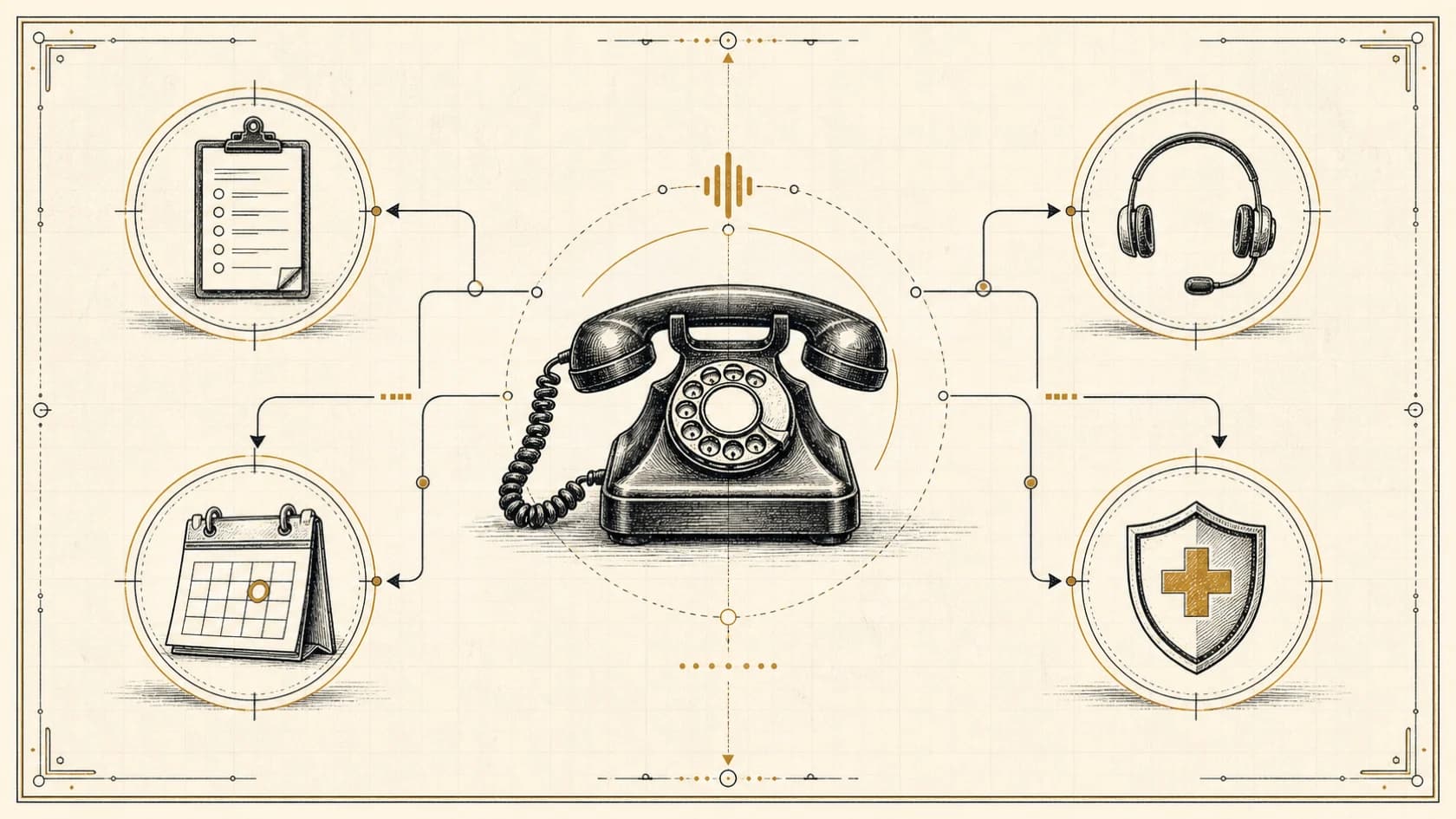
An AI receptionist for a small business should do a few important jobs reliably: answer approved questions, collect the facts your team needs, complete permitted scheduling steps, and hand uncertain or sensitive calls to a person with the conversation context attached.
That sounds simple. It is not the same as buying a phone number with a friendly voice. The useful product is an operating system around the conversation: policies, knowledge, integrations, permissions, fallback behavior, testing, and an owner who keeps it current.
The right buying question is not, “Does the voice sound human?” It is, “Can this system handle our actual call types without creating a new source of customer risk?”
1. Start with the calls you already receive
Review a representative sample of recent calls before comparing vendors. Remove private details, then sort the calls by purpose and consequence. Most businesses will find several distinct jobs hiding inside the receptionist label.
| Call type | Safe first action | Human boundary |
|---|---|---|
| New inquiry | Identify the caller, need, location, and timing | Escalate unusual scope, urgency, or policy questions |
| Existing customer | Verify identity and identify the request | Transfer complaints, account changes, and sensitive issues |
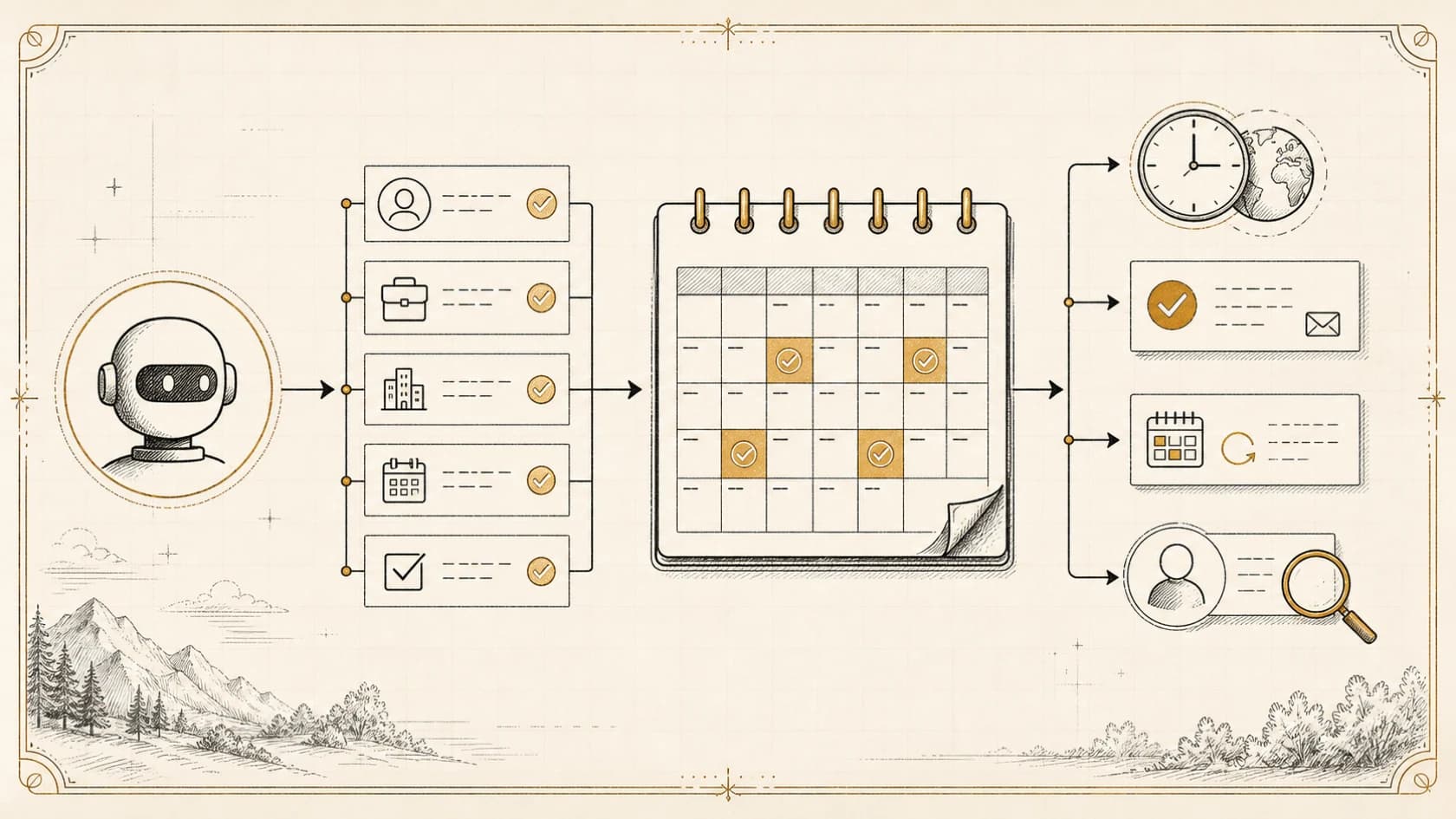
| Appointment request | Offer approved availability and collect required fields | Escalate exceptions, conflicts, and special accommodations |
| Common question | Answer from an approved source | Do not improvise when the source is missing or ambiguous |
| Emergency or safety issue | Use the company’s exact emergency instruction | Never diagnose, troubleshoot, or delay the prescribed handoff |
| Vendor or unrelated call | Apply the published routing rule | Preserve a path for uncertain identity or purpose |
A business with twenty routine appointment calls and two safety-sensitive calls does not have one workflow. The high-consequence minority should shape the boundary design.
2. Define what the receptionist may say and do
Separate conversation from authority. A system can sound confident while operating beyond its permission.
Write explicit rules for quoting, refunds, availability, service area, appointment commitments, account information, troubleshooting, and emergency language. For each rule, name the approved source and the human role that can make an exception.
Use three permission levels:
- Answer: The system may state information directly from a current source.
- Draft or recommend: The system may prepare a response or next action for review.
- Escalate: The system must stop, explain the handoff, and route the conversation.
Do not bury these boundaries in a long personality prompt. Keep operating instructions distinct from the knowledge base. Corey’s walkthrough of a no-code AI voice agent demonstrates that separation: identity and behavioral instructions belong in the agent configuration, while company facts belong in controlled knowledge.
3. Design intake around the next decision
An AI receptionist should not conduct a full discovery call when the next step only requires a name, contact method, service need, location, and timing.
Map every intake field to a decision. If a field does not affect routing, qualification, booking, or preparation for the next owner, ask whether it belongs later. Long interrogations make the caller repeat work and increase the chance of partial records.
Collect one fact at a time. Confirm critical details such as names, phone numbers, addresses, and appointment times. Preserve the caller’s original words alongside any normalized category. If the system is uncertain, it should ask a narrow clarification question rather than choose the closest label.
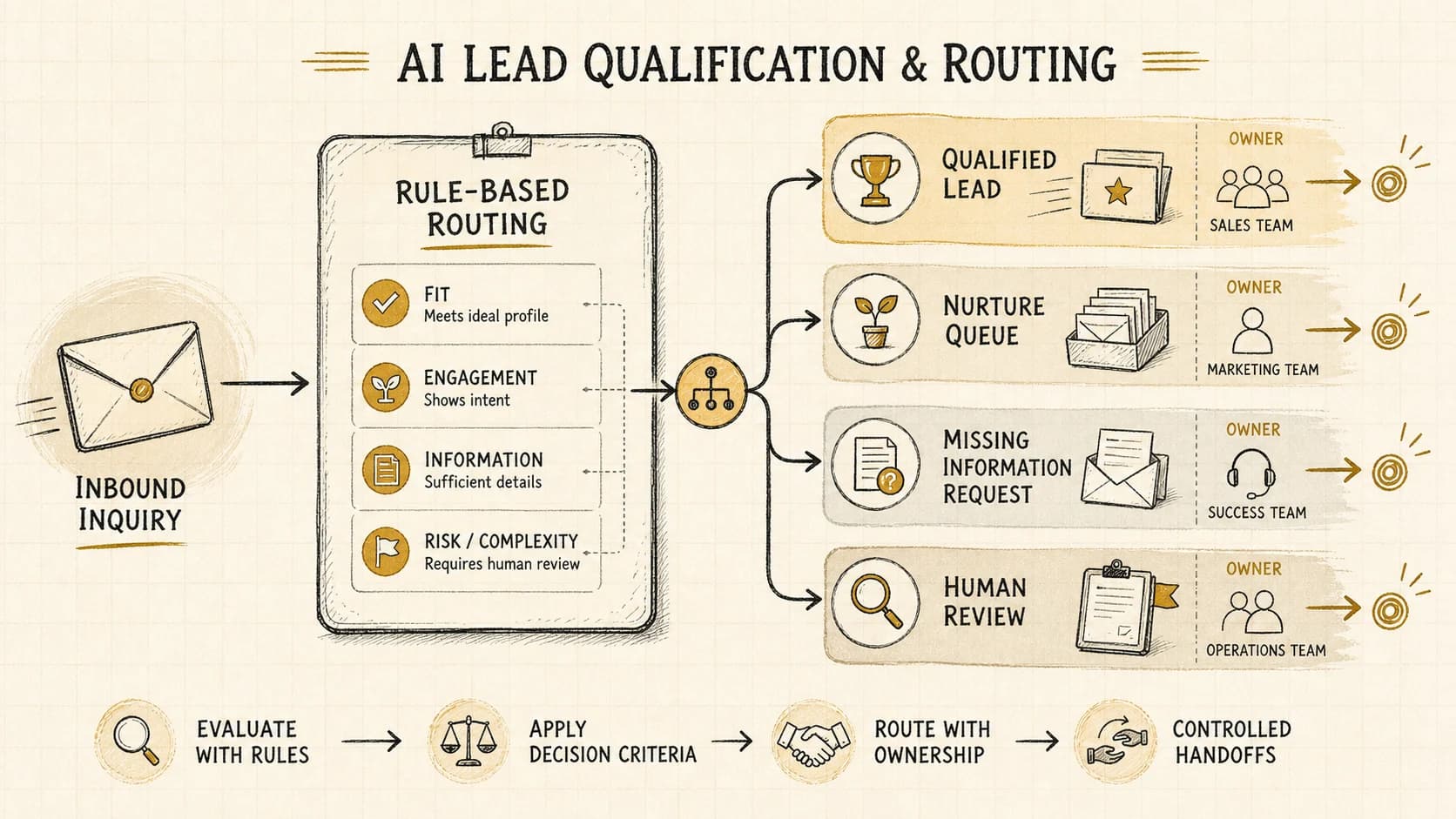
The lead qualification and routing guide explains how to turn the collected facts into visible fit rules and ownership decisions. The receptionist is the intake surface; it should not secretly invent qualification policy.
4. Require a complete human handoff
“Let me transfer you” is not a handoff plan. Decide what happens when the named person is unavailable, the call disconnects, the integration fails, or the customer asks for a person immediately.
Every handoff should include:
- caller identity and callback information;
- the reason for the call in the caller’s language;
- facts already collected and questions already asked;
- any relevant customer or appointment match;
- the exact reason for escalation;
- the promised next step and its owner.
The caller should not have to start over. If a live transfer fails, the system needs an approved backup: create a visible task, communicate the next step without inventing a response time, and confirm that the task reached an owned queue.
5. Inspect the integrations behind the voice
Receptionist demos often end when the transcript appears. Real operations continue into calendars, customer records, messages, and task queues.
Ask which systems the receptionist can read and write. Limit access to the minimum fields and actions required. A scheduling function may need approved availability and the ability to create a tentative appointment; it may not need permission to edit every calendar event. An intake function may create a lead record without permission to merge accounts or change an existing owner.
Writes should be attributable and retry-safe. If a call platform retries after a timeout, it should not create two contacts, two appointments, or two follow-up messages. Failures need a reconciliation queue that a person can see.
6. Test real variation, not only the happy path
Build an acceptance set before forwarding live calls. Include different accents, background noise, interruptions, corrections, silence, poor connections, repeat callers, existing customers, and requests that mix several purposes.
Test prohibited behavior as deliberately as successful behavior:
- an unsupported service request;
- a request for a firm quote;
- an angry customer asking for an exception;
- a safety-sensitive question;
- a caller who will not provide a required detail;
- unavailable calendar or customer system;
- conflicting information in two sources;
- a caller who asks whether they are speaking with AI.
Score the business outcome, not voice charm. Did the correct record receive the correct facts? Was the permitted action completed? Was uncertainty disclosed? Did the human owner receive the handoff?
7. Decide who operates the system after launch
Business facts change. Hours, service areas, team assignments, offers, calendars, and escalation policies will move. Without an update process, the receptionist becomes confidently outdated.
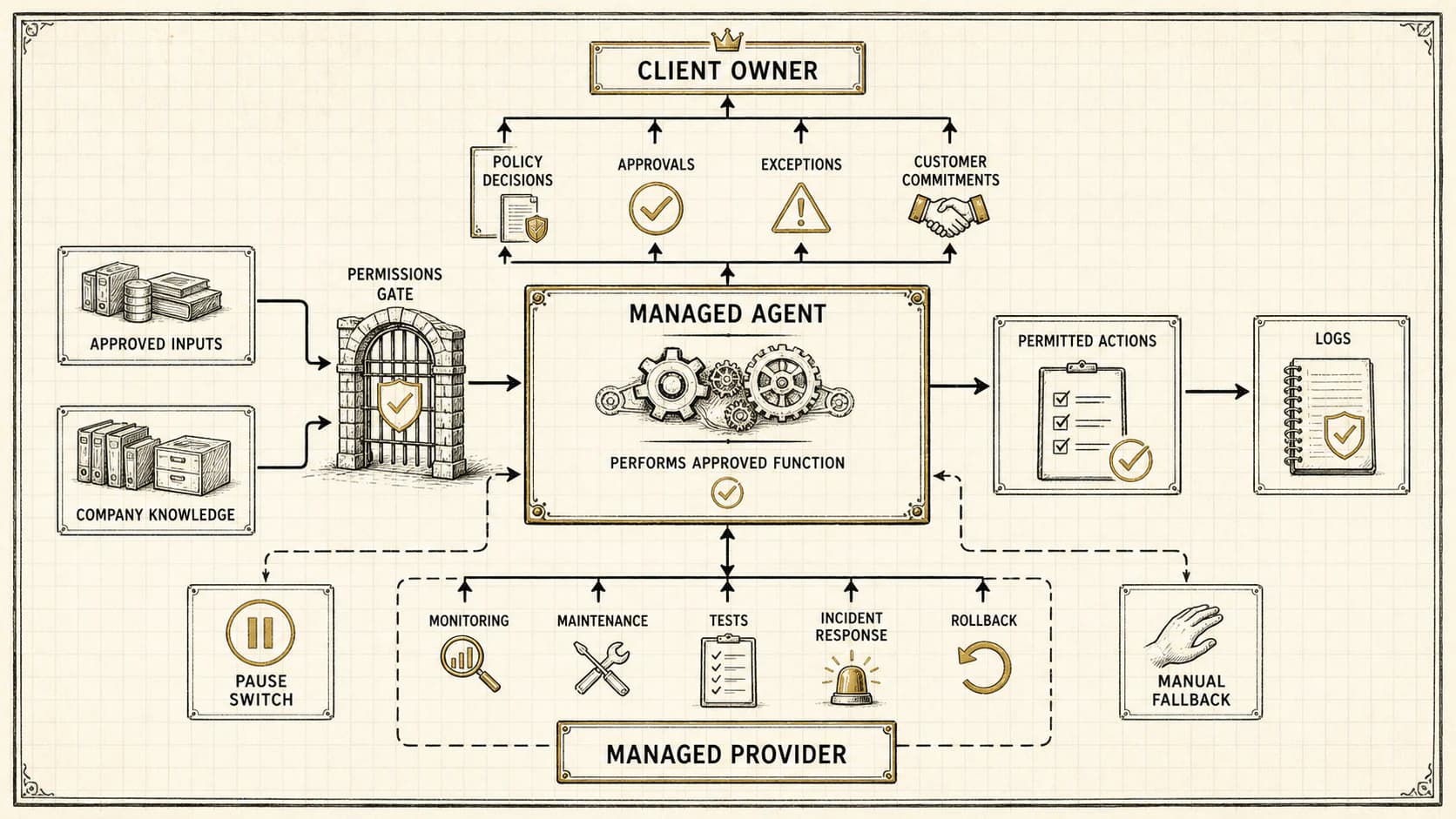
Name owners for knowledge, conversation policy, integrations, quality review, and incidents. Define how changes are approved, tested, published, and rolled back. Review transcripts and outcomes using a privacy policy appropriate to the business. Restrict access and retention rather than treating every recording as harmless training material.
A provider should make this operating model visible. “We monitor it” is incomplete without the monitors, response boundaries, review cadence, and accountable roles described in the managed AI agent ownership guide.
8. AI receptionist buying checklist
An AI receptionist can improve coverage and consistency, but the result depends on the workflow and control system around it. Treat vendor claims and keyword metrics as inputs for evaluation, not proof of results in your business.
If inbound calls are being missed, mishandled, or repeatedly handed off without context, apply for an assessment. We’ll determine whether this is the highest-value repeated bottleneck and recommend the practical next move.