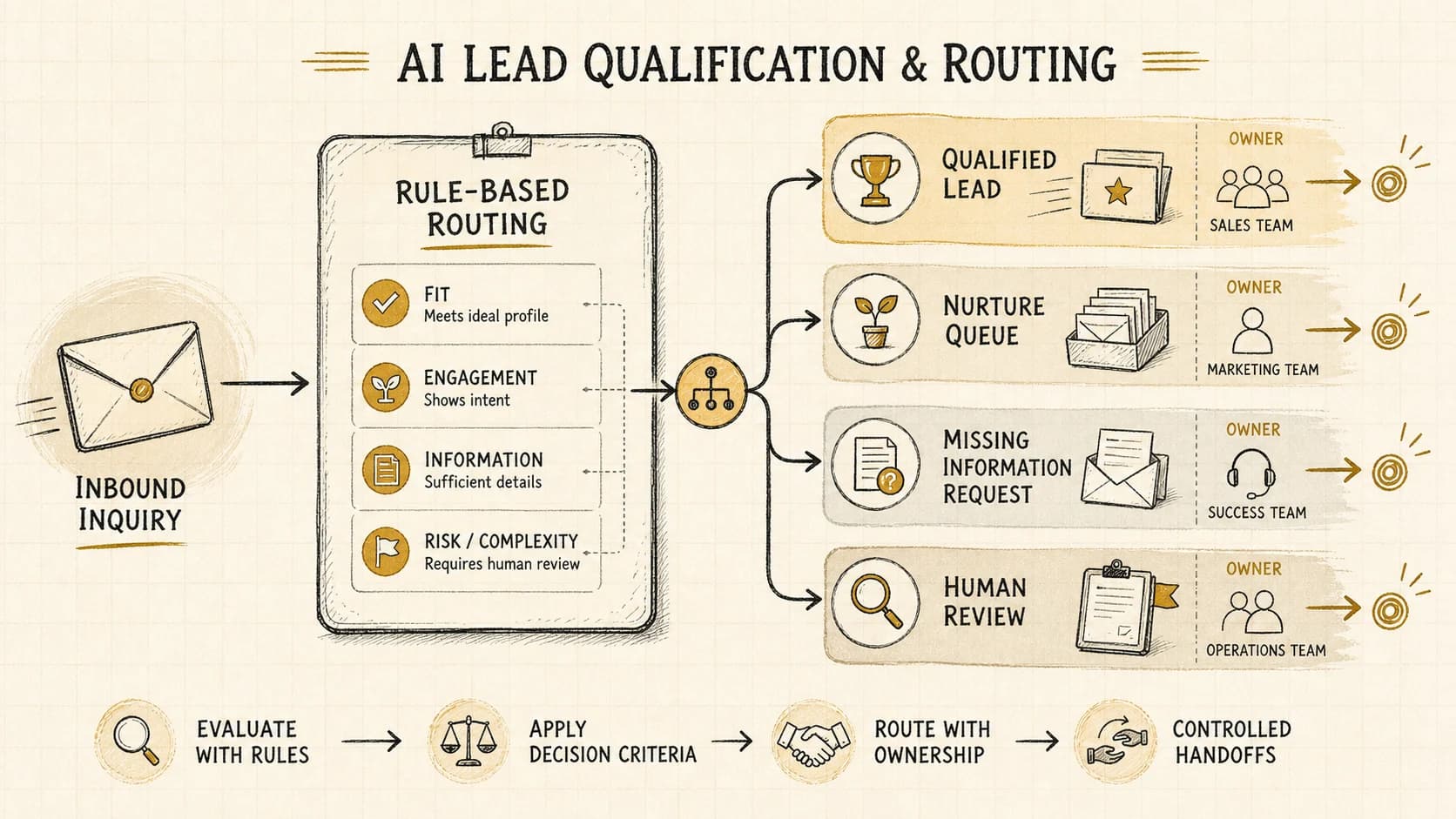
An AI lead-qualification system should apply the company's documented fit and disqualifier criteria, gather missing information, and route each inquiry to the correct owner. It should not invent the criteria, treat a model's confidence as business policy, or turn every uncertain lead into an automatic rejection.
Qualification is a business decision with operational consequences. It affects who receives attention, which customer expectations are set, what enters the pipeline, and what the company declines. The agent can make the process faster and more consistent only after the company defines the rules it is expected to apply.
The goal is not maximum automation. It is a complete, explainable handoff: the lead record, the evidence used, the route selected, the next action, and the owner responsible.
1. What AI lead qualification should decide
Start with the smallest useful decision. A qualification function might determine:
- whether the inquiry contains the minimum information for review;
- whether the requested work is within the company's market, service area, or capabilities;
- which service or team most likely owns the inquiry;
- whether a disqualifier is present;
- whether the lead should move to sales, nurture, clarification, or human review;
- which next action is allowed.
That is more precise than “qualify leads.” It separates observable decisions from vague expectations that the agent will somehow know a good customer.
For every decision, document the permitted outcomes. A simple route set might be:
| Route | Meaning | Required next action |
|---|---|---|
| Qualified | Published fit rules are met and required information is present | Assign the named sales owner and create the approved follow-up |
| Nurture | Potential fit exists, but timing or readiness does not support sales review | Enter the approved nurture path |
| Missing information | Fit cannot be evaluated because required facts are absent | Request only the missing facts |
| Human review | Rules conflict, consequence is high, or the situation is novel | Send evidence and uncertainty to the named reviewer |
| Disqualified | An approved disqualifier clearly applies | Record the reason and use the approved response |
The company owns these meanings. A provider can help formalize and implement them, but should not decide which prospects deserve service.
2. Qualification is not the same as lead scoring
Lead scoring usually ranks or prioritizes. Qualification decides whether a defined gate has been met.
A score may combine firmographic fit, expressed need, engagement, timing, and other signals. That can help order a queue, but a high score does not erase a disqualifier. A low engagement score does not necessarily make an existing customer unimportant.
Keep hard rules, soft signals, and routing constraints separate:
- Hard fit rules: service area, supported work, required authority, minimum technical or operational conditions.
- Disqualifiers: prohibited work, impossible timing, missing permission, conflict, or another explicit reason not to proceed.
- Priority signals: urgency, account value, strategic fit, or engagement.
- Routing constraints: territory, expertise, existing ownership, capacity, language, or relationship.
When these are collapsed into one hidden number, a reviewer cannot tell why the lead moved. The system should show which rule fired and which facts supported it.
3. Define required inquiry data
Qualification cannot be more reliable than its input.
List the fields required to make the decision and the sources allowed to provide them. Common inputs include contact identity, company, requested outcome, location, service, timing, current system, budget authority, or existing-customer status. The correct set depends on the business.
Avoid asking for every possible detail before responding. Separate:
- information needed to identify and acknowledge the inquiry;
- information needed to select an owner;
- information needed to qualify;
- information needed later for discovery, scope, or quote preparation.
This prevents the qualification workflow from becoming an intake wall that creates abandonment.
Define normalization and validation rules. Company names, phone numbers, locations, and service labels may arrive in multiple formats. Preserve the original submission, map only when confidence is adequate, and route ambiguous matches for review.
Missing information should trigger a narrow request. The agent should say what is needed and why, using approved language. It should not fill a gap with a guess drawn from a similar company or public profile.
4. Write fit and disqualifier rules
Good qualification rules can be reviewed by the people who own sales and delivery. They use observable conditions and name the source of truth.
For example:
If the requested service is in the current service catalog, the location is inside the approved service area, and no explicit disqualifier applies, route the inquiry to the owner mapped to that service and territory. If any required fact is missing, request it. If two ownership rules conflict, route to sales operations for review.
That rule is testable. “Send good leads to sales” is not.
Return My Time's internal qualification notes use signals such as scattered knowledge, unsatisfactory generic AI output, an owner-felt revenue leak, connectable sources, a desire for managed implementation, and a repeatable function worth staffing. Those signals describe Return My Time's own offer. They are an example of structure—not a template to impose on another company.
Each client must define:
- the customers and problems it is equipped to serve;
- non-negotiable requirements;
- explicit disqualifiers;
- what can be clarified rather than rejected;
- who may approve an exception;
- how criteria changes are proposed and published.
Store version and effective-date information with the rules. If the sales strategy changes, the agent needs the approved current version, and the team needs to know which version shaped an earlier route.
5. Build the ownership and routing map
Qualification without ownership creates a better-organized waiting room.
Map each permitted route to a role, queue, response action, and backup. Include existing-account ownership before assigning a new lead. A current customer, open opportunity, partner referral, or previously disqualified record may require a different path.
An ownership map can include:
| Condition | Primary owner | Backup | Safe behavior if unavailable |
|---|---|---|---|
| New qualified inquiry for Service A | Service A sales owner | Sales manager | Hold in visible queue and escalate |
| Existing customer | Current account owner | Account director | Preserve ownership; do not create a duplicate opportunity |
| Unclear service fit | Sales operations | Delivery reviewer | Request clarification or pause |
| Policy exception | Named approver | Executive backup | No promise until approval |
Capacity rules should not masquerade as fit rules. A qualified prospect does not become a bad fit because one owner is unavailable. Route or queue it according to the company's service policy.
6. Handle missing information, duplicates, and existing customers
Edge cases are normal operating work.
Before creating a new record, check the approved identifiers and match rules. Exact email matches may be straightforward. Shared inboxes, phone changes, subsidiaries, and spelling variations need more care. Define when the system may merge, link, flag, or create.
Merging is consequential. A false merge can expose information to the wrong record or overwrite ownership. Prefer a review task when identity is uncertain.
For missing information, record:
- which field is missing;
- why it is required;
- when and how the request was sent;
- whether a response arrived;
- when the request expires or escalates;
- who owns unresolved work.
For existing customers, preserve relationship context. The right action may be account support, expansion review, delivery escalation, or the current owner—not the new-business queue.
7. Control CRM writes and external messages
Begin with the least authority needed to prove the workflow.
An early version can create an internal summary and recommended route without changing ownership or messaging the prospect. Once the recommendations are accepted across normal and edge cases, add controlled CRM writes. External responses can follow only after content, timing, identity, and approval rules are tested.
Every write should be attributable. The record should show:
- the source inquiry;
- the rules and data used;
- the selected route and reason;
- fields created or changed;
- messages drafted or sent;
- approvals and overrides;
- failures, retries, and reconciliation status.
Use stable identifiers and idempotent operations so a retry does not create a duplicate lead, task, or message. If a human changes the record after the agent acts, do not overwrite the newer decision without an explicit conflict policy.
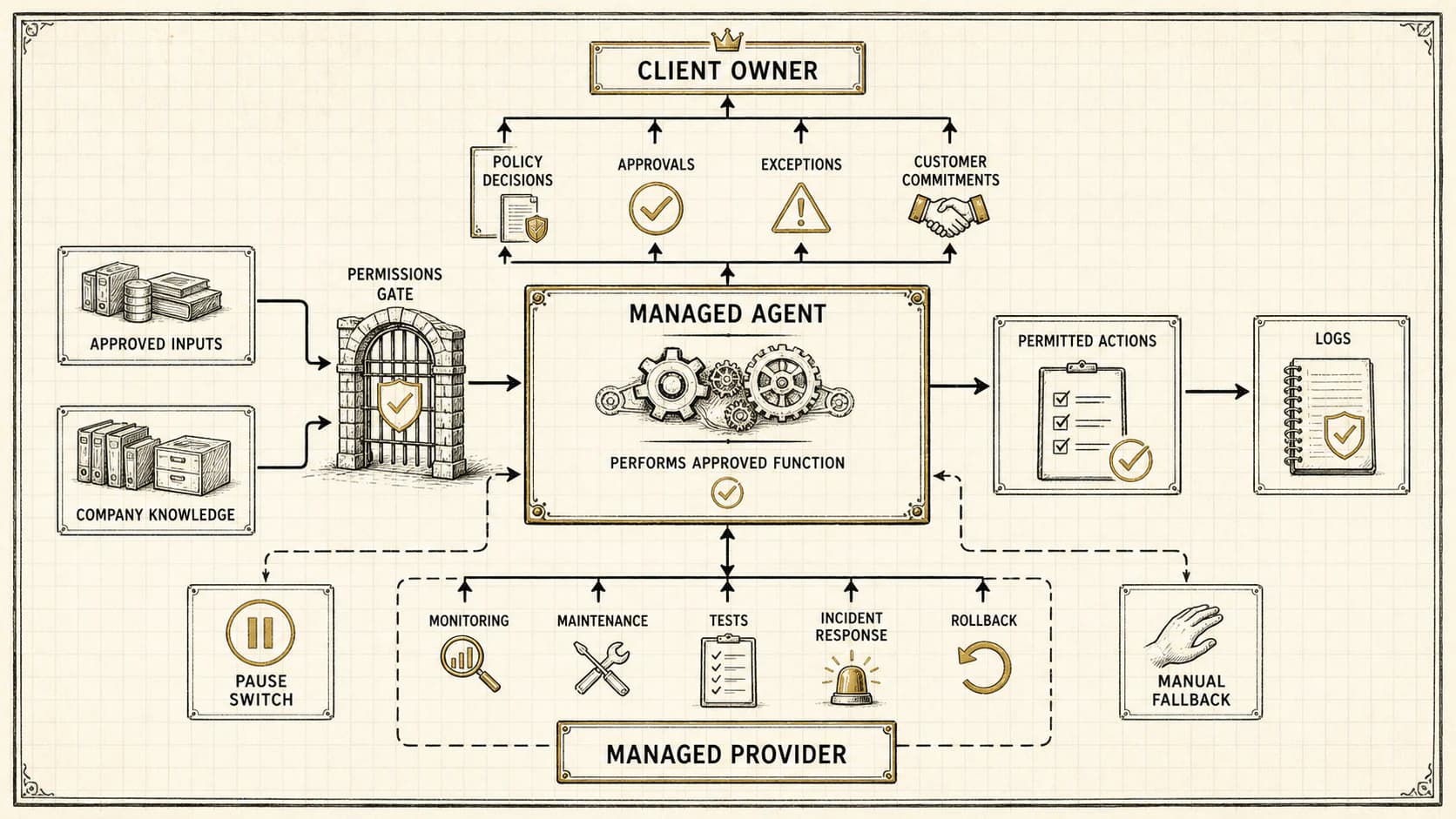
The managed-agent ownership guide provides the broader contract for permissions, approvals, maintenance, and incident response. Qualification should inherit that control model while remaining focused on one function.
8. Acceptance tests and operating measures
Build the acceptance set before launch. Use sanitized or synthetic examples that represent real variation.
Test:
- a complete, clearly qualified inquiry;
- each published disqualifier;
- every required field missing individually;
- conflicting fit and disqualifier signals;
- an existing customer and an open opportunity;
- a likely duplicate and an ambiguous match;
- an unsupported service or location;
- an unavailable primary owner;
- a CRM outage, message failure, and retry;
- a criteria change between submission and review;
- prohibited actions such as inventing a fact or sending an unapproved promise.
Measure decisions and handoffs, not only whether the process ran:
- records awaiting missing information;
- qualified, nurture, review, and disqualified counts by reason;
- time waiting in each queue;
- owner acceptance and override rates;
- duplicate or reconciliation failures;
- unresolved exceptions;
- response or follow-up completion against the company's baseline.
An override is not automatically an agent failure. It may reveal a missing rule, changing strategy, or reviewer inconsistency. Review the pattern and decide whether the source, rule, test, or training needs to change.
9. Lead-qualification readiness checklist
If the team cannot agree on what qualified means, the first task is not installing an agent. It is aligning sales, delivery, and leadership around the gate they already use—often inconsistently.
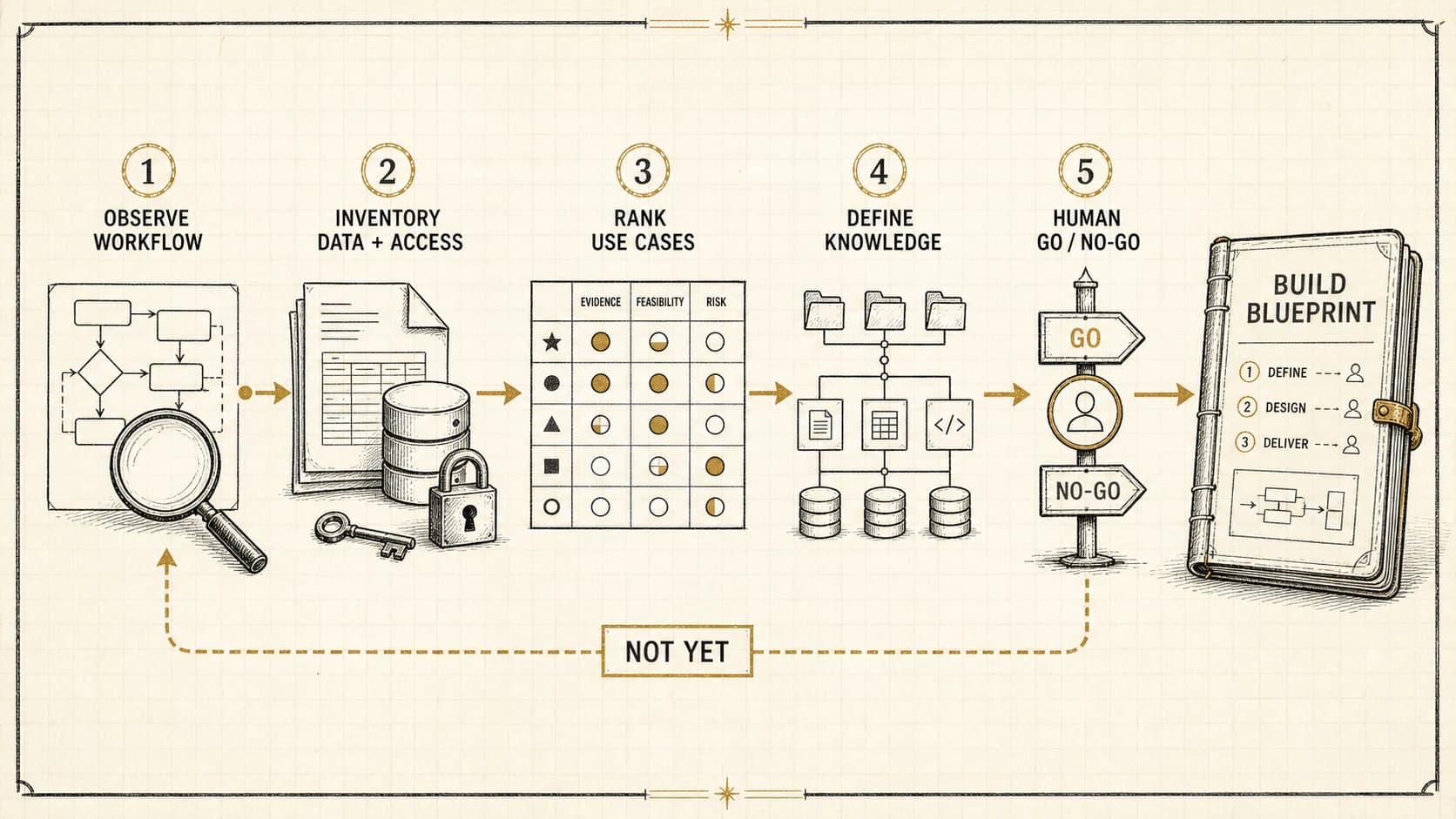
The AI assessment process is designed to expose those workflow, knowledge, ownership, and integration decisions before implementation. If qualification and routing are persistent bottlenecks, apply for an assessment to identify the best first opportunity and practical next action.