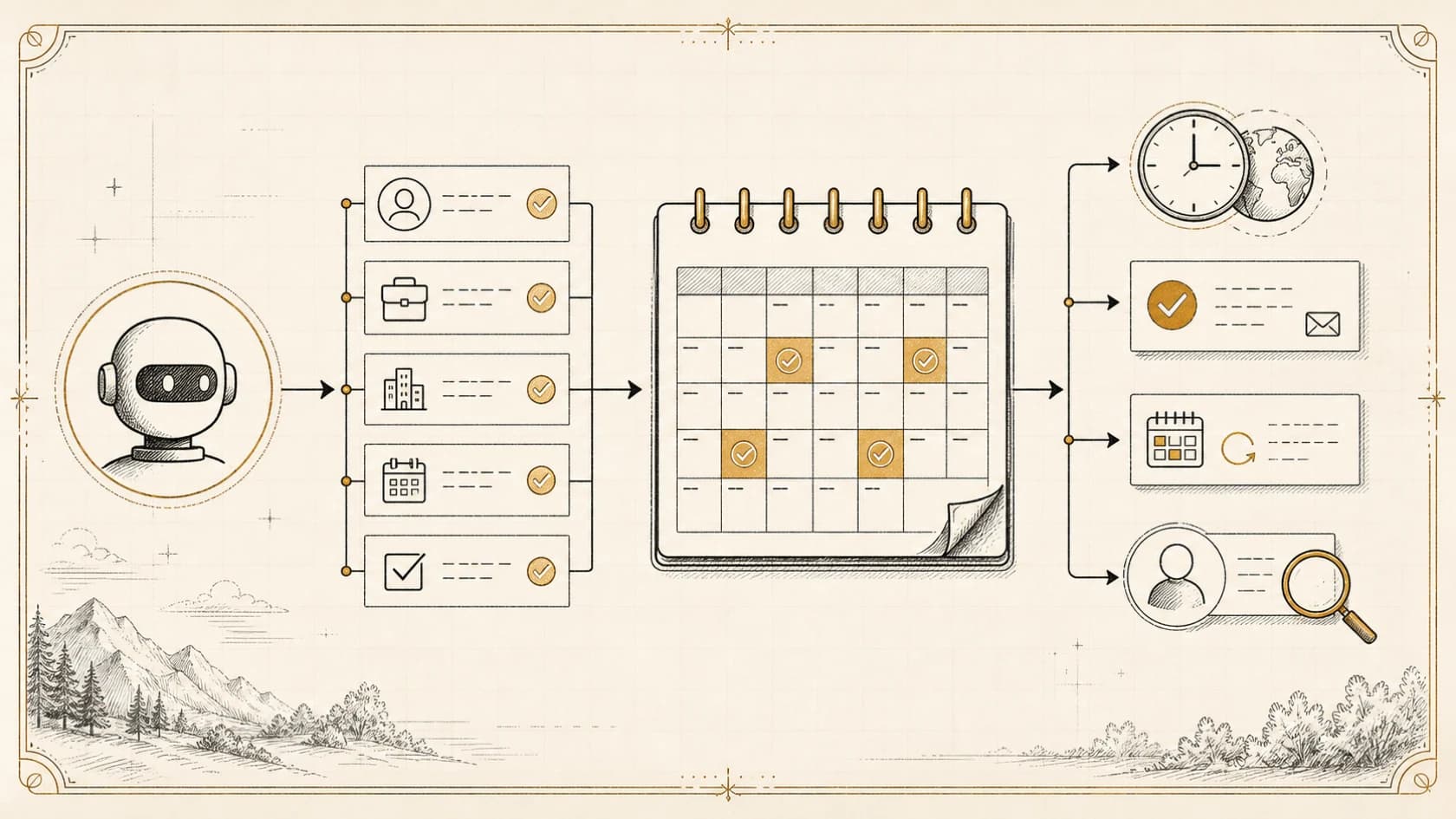
An AI appointment setter should not be judged by how many calendar events it can create. It should be judged by whether the right person is booked for the right meeting, with the required context, under the company’s actual scheduling rules.
For a professional-services business, a bad booking consumes delivery or sales capacity, creates a poor first impression, and can expose information or promises that were never approved. Reliable scheduling begins before the calendar tool.
1. Define the appointment the system is allowed to create
Write a contract for each meeting type. Include purpose, eligible audience, required intake, duration, permitted hosts, locations, buffers, notice window, capacity limits, and cancellation policy.
| Meeting type | Entry condition | Safe behavior when unclear |
|---|---|---|
| Introductory discovery | Published minimum-fit facts are present | Request missing facts or route to review |
| Existing-customer review | Customer identity and account ownership are verified | Preserve current owner; do not create a new-sales event |
| Technical or delivery consult | Required artifacts and specialist match are confirmed | Hold the request until the named reviewer approves |
| Urgent service request | Urgency rule and service coverage are confirmed | Use the company’s escalation path, not a normal slot |
| Follow-up meeting | Prior conversation and responsible owner are identified | Ask for clarification rather than assigning a random host |
The company owns these conditions. A provider can implement them, but should not invent who deserves access to a scarce calendar.
2. Separate qualification from scheduling
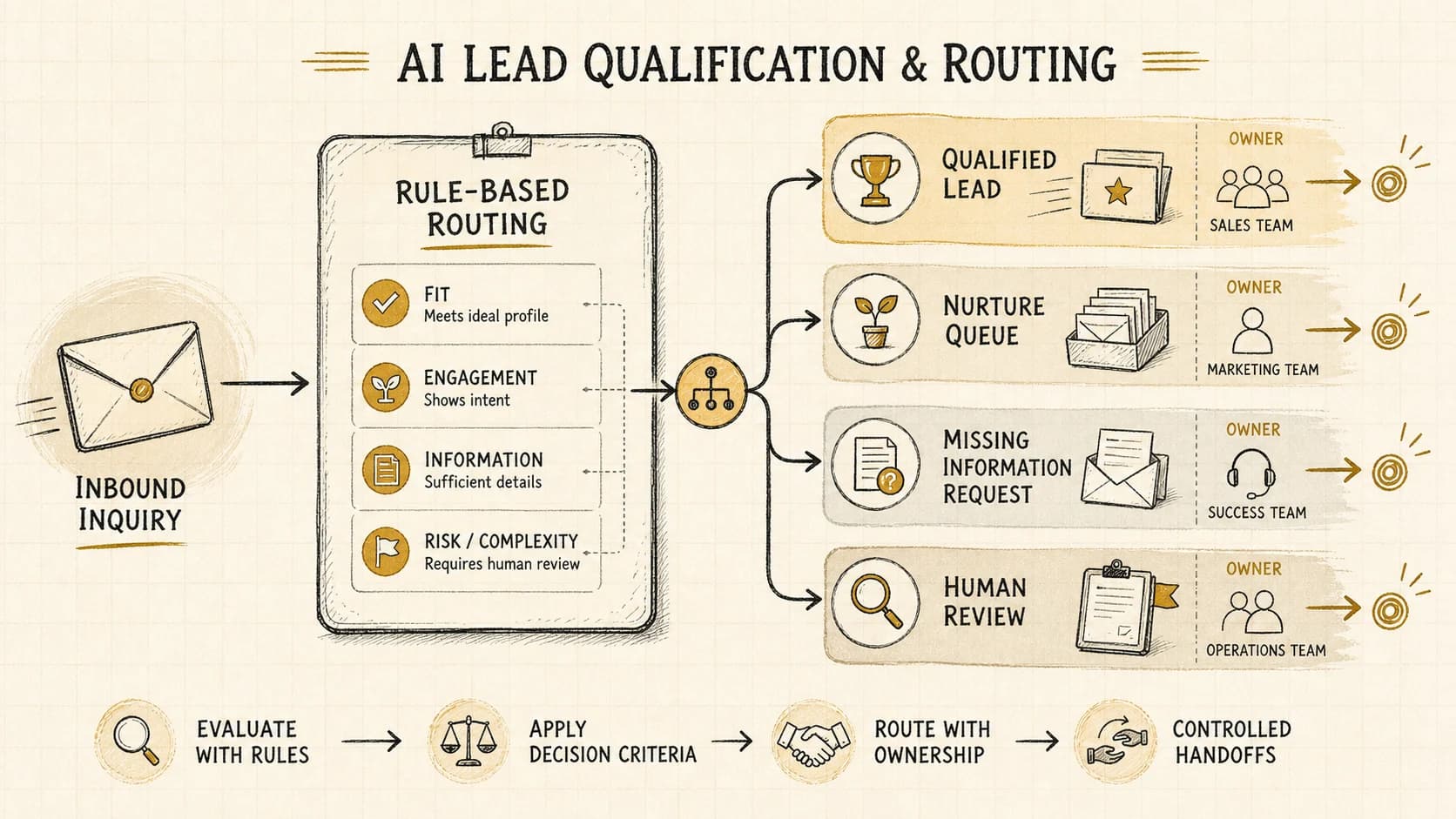
Qualification decides whether the meeting is appropriate. Scheduling decides which approved time and host satisfy the rules. Combining both inside a conversational prompt makes mistakes difficult to inspect.
Use explicit fit, disqualifier, missing-information, and human-review outcomes. The lead qualification guide shows how to make those decisions explainable. Pass the resulting route and evidence into scheduling.
Avoid collecting full discovery information merely to book. Ask only for facts required to select the meeting, host, location, and preparation. Preserve the prospect’s wording for the eventual owner.
3. Model real calendar constraints
Visible availability is not always bookable availability. Rules may depend on territory, expertise, account ownership, travel, time zone, working hours, buffers, preparation time, meeting location, or the availability of several people.
Document which system is authoritative for each constraint. Re-check availability immediately before writing the event. Hold or create the booking atomically when possible; otherwise define how to handle the race where another event takes the slot.
Use stable time-zone handling and show the time zone to the prospect. Test daylight-saving changes and participants in different regions. Do not let a model calculate local time from conversational hints when the scheduling system can provide it deterministically.
4. Control the conversation around the booking
The setter can explain meeting purpose, request required facts, offer approved times, confirm the selection, and provide published preparation steps. It should not promise results, invent availability, negotiate scope, or answer sensitive questions from an incomplete source.
Keep behavioral instructions separate from company knowledge. Corey’s AI voice agent walkthrough is a useful mechanism-level example: define identity, instructions, and boundaries separately from the knowledge the agent retrieves.
If the prospect requests an exception, a different service, an unusual attendee, or immediate advice, route the complete conversation to a person. Friendly improvisation is still improvisation.
5. Design confirmation, reminders, and changes as one lifecycle
A booking is not complete when a calendar write succeeds. Confirm the event through approved channels, include accurate location and preparation, and record delivery status.
Rescheduling and cancellation need the same identity, permission, and ownership discipline as booking. Define who can move which meeting, how late changes are handled, which calendars must stay synchronized, and how hosts are notified.
Before any reminder, re-check that the event still exists, the recipient is correct, and the message is permitted. A stale reminder after cancellation is a visible signal that systems disagree.
6. Prevent duplicates and preserve ownership
Search approved identifiers for an existing contact, account, open opportunity, or appointment before creating new records. Do not automatically merge ambiguous identities. A false merge can expose calendar details or attach one person’s history to another.
Use idempotency so retries cannot create duplicate events or confirmations. If the calendar write succeeds but the CRM write fails, create a reconciliation item rather than repeating the whole workflow.
Preserve relationship ownership. An existing customer or referred prospect may need a particular person even when another calendar has earlier availability.
7. Decide where humans approve or take over
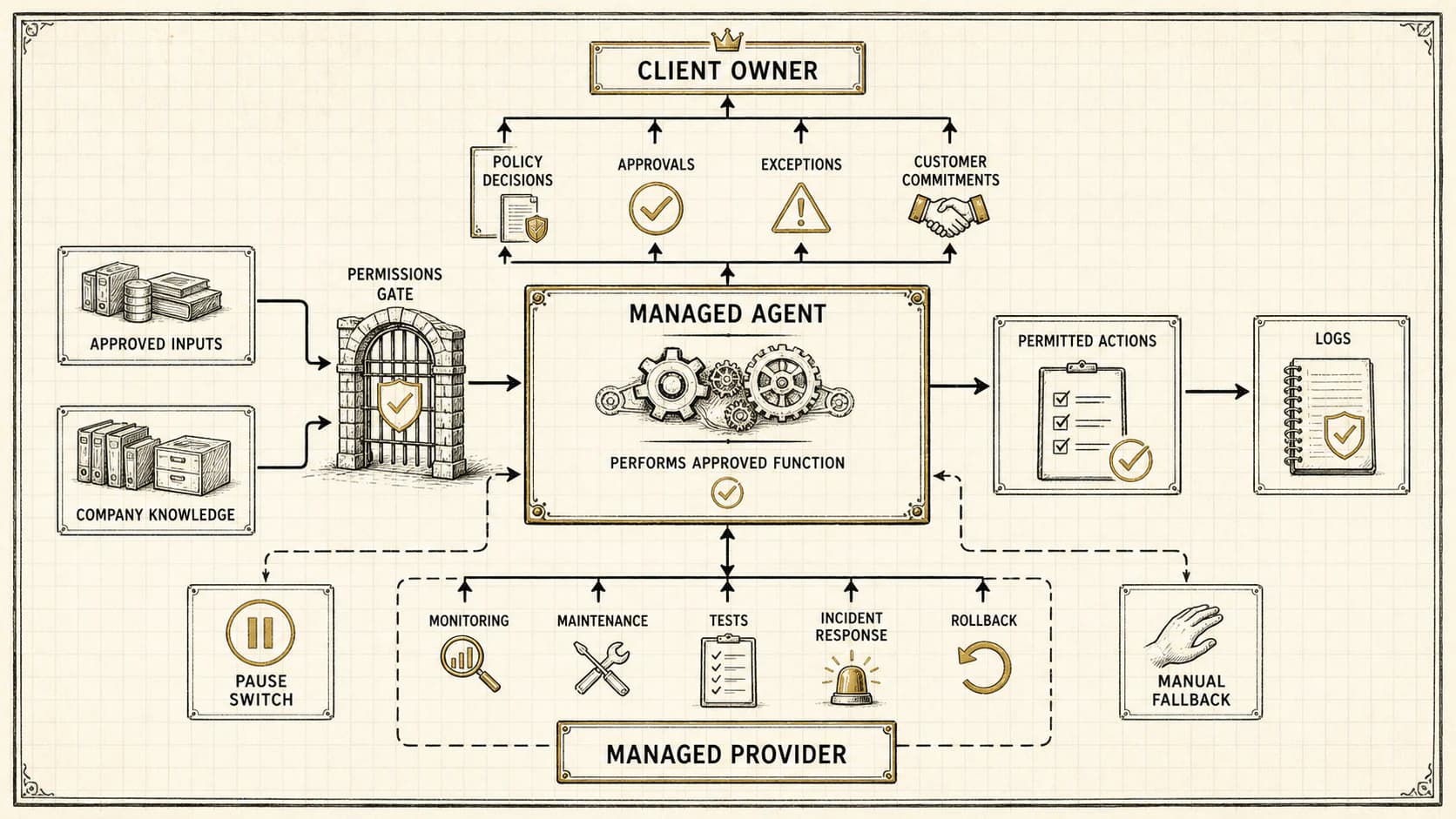
Start with recommendation mode: the system proposes the meeting type, host, and available choices. Review performance against a representative acceptance set. Then permit narrow writes for low-consequence, well-understood cases.
Keep human approval for conflicting qualification signals, high-value or sensitive accounts, policy exceptions, unusual scope, complaints, unclear identity, and any promise beyond published scheduling policy.
Every takeover should include the transcript, structured facts, detected rule, attempted action, and current system state. The prospect should not have to repeat the entire conversation.
8. Test the complete booking path
Test clear fits, missing fields, disqualifiers, existing customers, duplicate requests, full calendars, host changes, time-zone differences, daylight-saving boundaries, concurrent bookings, cancelled events, failed confirmation delivery, CRM outages, calendar outages, and manual edits during automation.
Measure more than event count:
- requests reaching a valid decision;
- appointments accepted or overridden by owners;
- missing preparation or context;
- duplicate and reconciliation events;
- reschedule and cancellation integrity;
- no-show reasons where reliably known;
- unresolved exceptions and time waiting for review.
These are operating measures, not guaranteed business outcomes. Compare them with the company’s own baseline.
9. AI appointment setter checklist
An AI appointment setter is valuable when it protects calendar quality as carefully as it improves access. If booking currently depends on scattered rules, manual qualification, and repeated handoffs, apply for an assessment to identify the primary bottleneck and the most practical first move.