AI implementation services should turn a validated business problem into a controlled operating capability. That requires more than selecting a model, connecting software, and showing a successful demo.
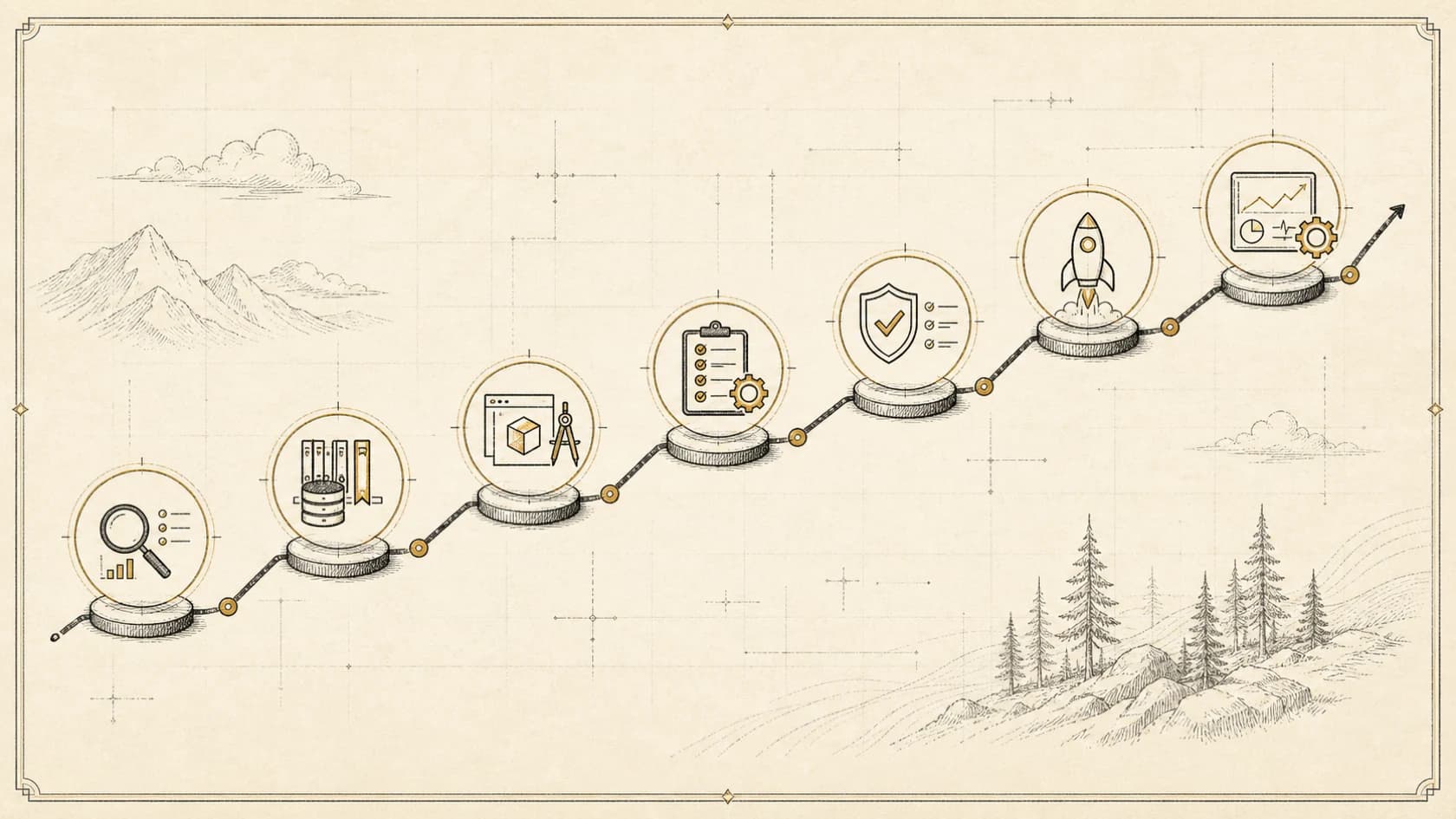
The implementation path should expose decisions in the right order: workflow, baseline, knowledge, authority, integrations, acceptance tests, launch boundaries, monitoring, and ownership. Skipping an early decision usually creates a more expensive problem later.
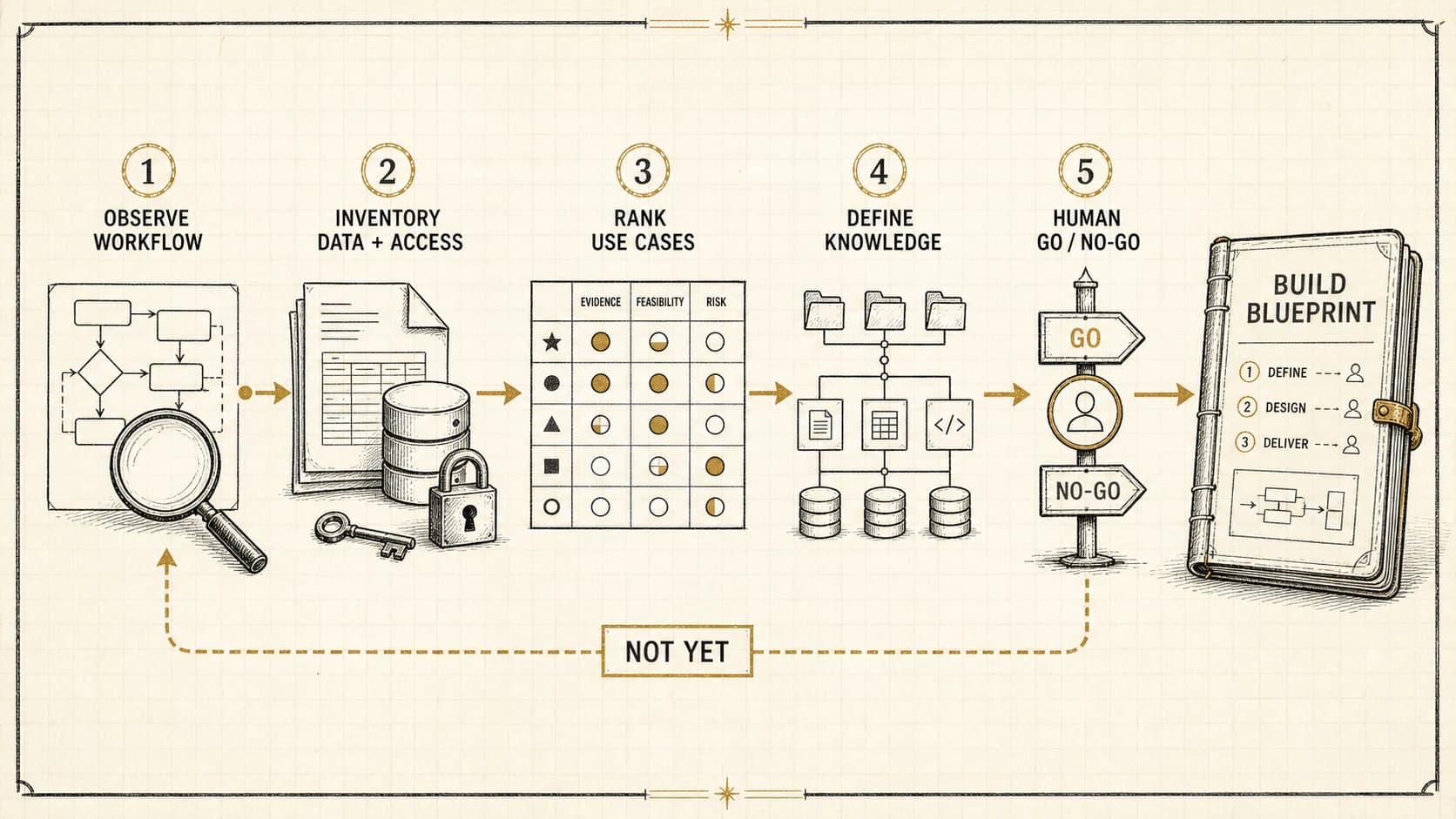
1. Assessment: decide whether to build
Begin with one repeatable function and evidence from the current process. Observe volume, variation, delays, rework, errors, customer impact, systems, data, knowledge sources, and ownership.
The assessment should answer:
- Is the problem material enough to prioritize?
- Is the process stable enough to describe?
- Which decisions are deterministic, model-assisted, or human?
- Is the required knowledge available and maintainable?
- Can the necessary systems be accessed safely?
- What baseline and acceptance evidence will guide the decision?
The AI assessment guide describes this stage in detail. A valid result may be to simplify the process, improve a source, use ordinary automation, or stop. “Do not build yet” can be a successful assessment outcome.
2. Design: write the operating contract
Translate the chosen function into observable states, inputs, decisions, actions, exceptions, outputs, and owners.
| Design element | Required decision | Evidence before build |
|---|---|---|
| Inputs | Approved sources, required fields, identity rules | Representative records and data-quality review |
| Decisions | Published rules, model tasks, human judgments | Owners approve definitions and exceptions |
| Actions | Reads, writes, messages, and approvals | Permission matrix and consequence review |
| Handoffs | Context, queue, owner, and fallback | Operators can resolve sample cases |
| Success | Business outcome and safe final state | Baseline and acceptance criteria are recorded |
| Operation | Monitoring, updates, incident response, rollback | Named roles accept the runbook |
This contract prevents the build team from silently becoming the policy team.
3. Knowledge: create sources the system can trust
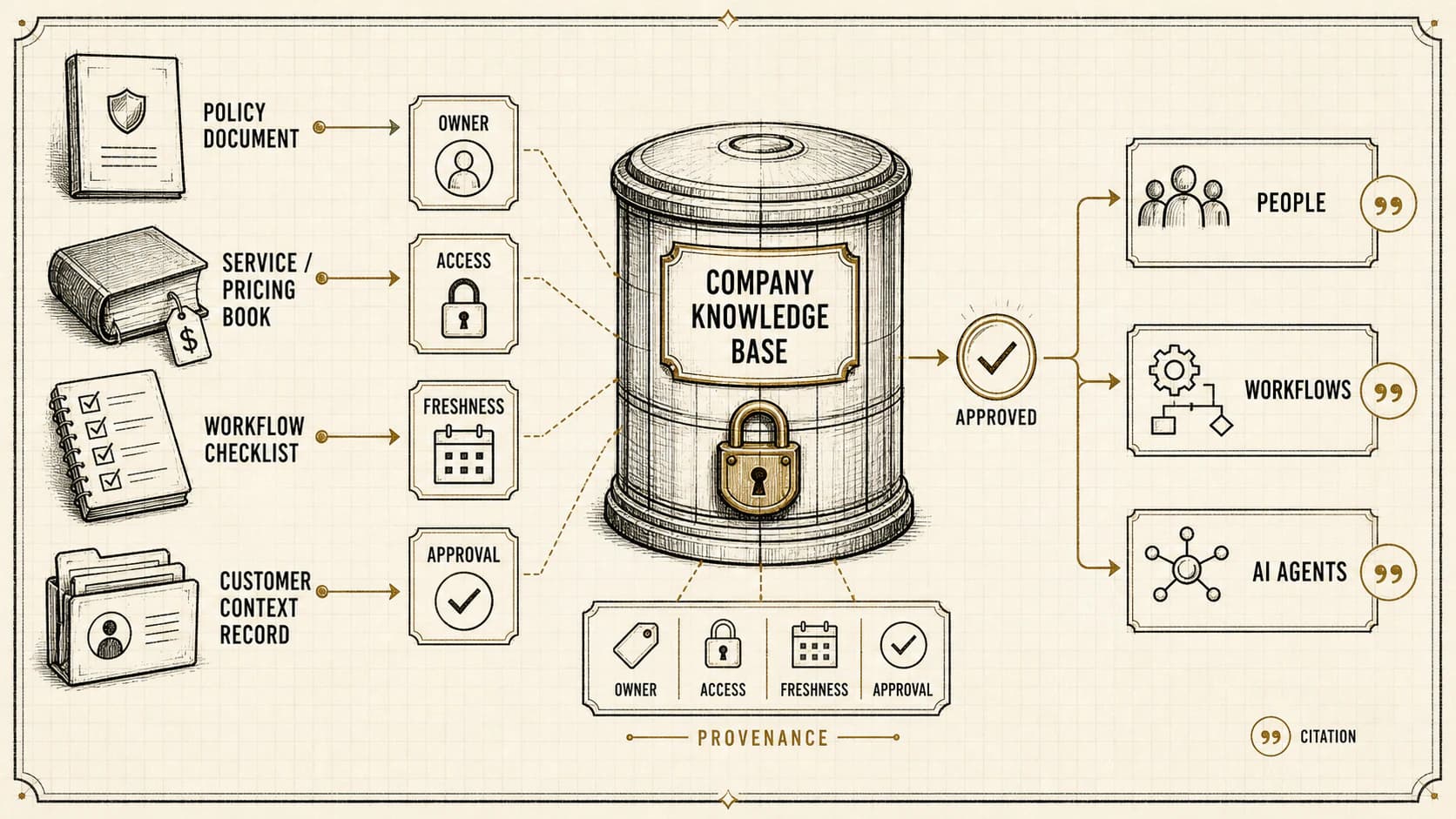
An implementation needs a maintained source of truth for policies, services, definitions, examples, escalation rules, and constraints. A folder of mixed documents is not automatically a knowledge base.
Assign an owner, authority level, effective date, and review process. Separate current policy from history and drafts. Make retrieval cite its source so a user or reviewer can inspect the answer.
The company knowledge base guide covers the structure. Knowledge work is not a one-time upload; changes in offers, staff, systems, or policy must reach the agent through a controlled publishing path.
4. Build: grant the least authority needed
Implement the smallest end-to-end slice that can produce useful evidence. Begin read-only or in recommendation mode. Add draft generation, then narrow internal writes, then selected external actions only after each level passes its tests.
Use deterministic code for deterministic rules. Use models for bounded language work such as retrieval, extraction, classification, summarization, and drafting. Keep pricing, approvals, legal commitments, sensitive exceptions, and material customer decisions with authorized people unless a very explicit policy supports otherwise.
Integrations need stable identifiers, idempotent writes, conflict checks, retries, and reconciliation. A successful API response is not proof that the business state is correct.
5. Test: evaluate the complete business outcome
Create the acceptance set before launch. Include representative normal cases, edge cases, missing data, conflicting sources, duplicate events, system outages, stale records, permission failures, manual changes during execution, and prohibited actions.
For every test, define the expected output, allowed sources, permitted action, escalation, and final system state. Test the human handoff as carefully as the automated path.
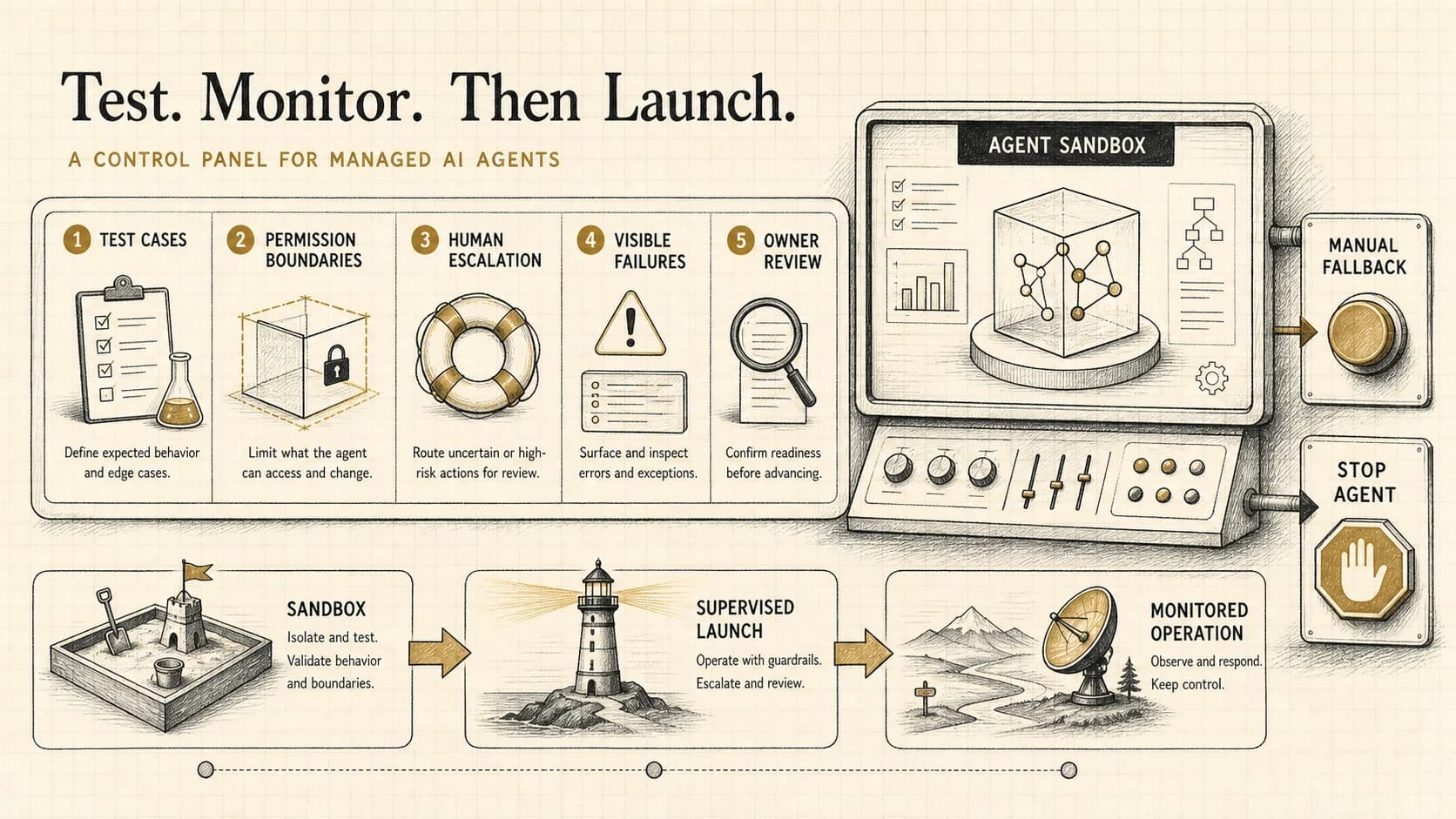
The managed-agent testing guide explains the broader regression, monitoring, and incident model. Model or prompt quality alone cannot compensate for a broken queue or duplicated CRM write.
6. Launch: use a bounded evidence period
Launch with limited scope, authority, audience, or volume. Keep a manual fallback and rollback path. Compare outputs with experienced operators and review every consequential exception.
Corey’s episode on the three levels of AI automation provides a useful framing for increasing capability. The practical rule is to earn authority through evidence rather than starting with the most autonomous configuration.
Define go, revise, pause, and rollback conditions before launch. Do not move the goalposts because the demo is exciting or the implementation has already consumed effort.
7. Operate: monitor business state and drift
Production operation includes system health, decision quality, queues, unresolved exceptions, stale knowledge, permission changes, vendor changes, cost, and user feedback.
Monitor outcomes such as records reaching the correct state, handoffs accepted, writes reconciled, and external messages delivered appropriately. Review overrides and incidents for patterns. Update the source, rule, test set, or permission—not only the prompt.
Changes need versioning, regression testing, approval, deployment records, and rollback. A managed agent is a maintained business system.
Reporting should connect technical events to operator action. A model timeout matters because a lead is waiting, a failed calendar write matters because a customer received a confirmation, and stale knowledge matters because the system may repeat an outdated policy. Dashboards should help an owner decide what requires attention, not simply accumulate telemetry.
8. Clarify provider and client ownership
Ask who owns business policy, knowledge approval, credentials, integrations, monitoring, incidents, vendor relationships, model selection, costs, and termination. The client should retain access to its data, documentation, and operating history.
Return My Time describes the broader contract in the managed-agent ownership guide. Managed service does not mean invisible service. Responsibilities and evidence should be clear.
9. AI implementation services checklist
No provider can honestly promise results before examining the workflow and baseline. If you are evaluating AI for a repeated business function, apply for an assessment. Return My Time starts by identifying one prioritized opportunity, estimating the time it can reclaim, and recommending the most practical first action for your current tools and operating context.