Knowledge management for a small business is the practice of making important operating knowledge findable, authoritative, usable, and maintainable. It is not the same as collecting every file in one drive.
AI makes the distinction more important. A person may notice that a document is old, informal, or contradicted by experience. An AI system can retrieve the same document and present it with unwarranted confidence unless authority and context are encoded.
1. Start with the decisions knowledge must support
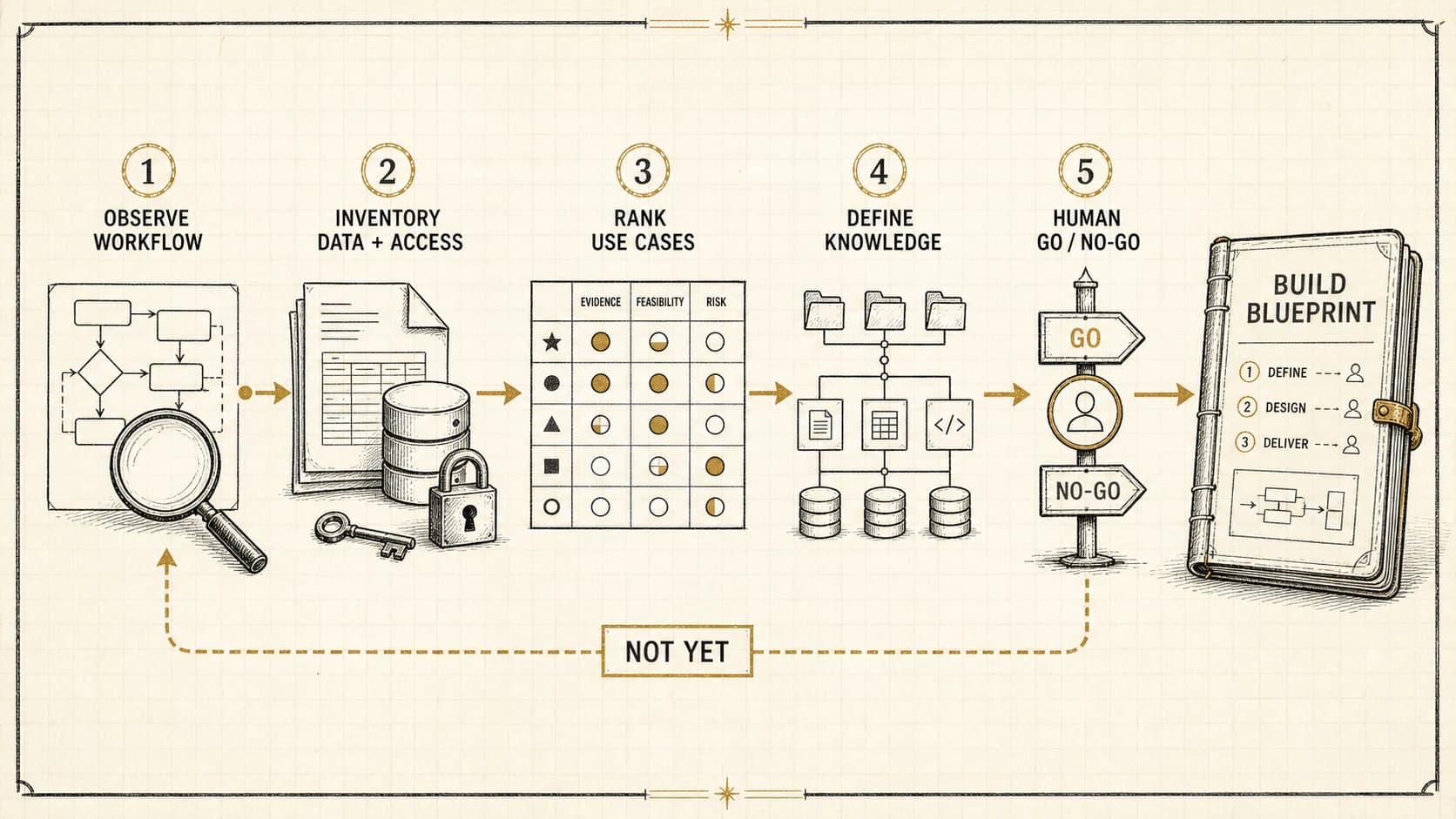
Choose one high-value function: answering service questions, qualifying leads, preparing quotes, onboarding staff, handling customer requests, or executing a recurring operation.
List the decisions and answers that function requires. Then identify where the team gets them today. This creates a useful scope and avoids a company-wide cleanup with no clear outcome.
| Knowledge type | Example | Required control |
|---|---|---|
| Policy | What the company permits or prohibits | Approver, effective date, exception path |
| Service definition | What is included and excluded | Service owner and current version |
| Procedure | How a recurring task is completed | Operator validation and test case |
| Decision rule | How fit, routing, or escalation is determined | Business owner and observable conditions |
| Reference fact | Hours, locations, contacts, system fields | Source and review cadence |
| Example | A representative approved output | Context, limitations, and provenance |
| History | Why a decision changed | Clearly separated from current instruction |
The scope should be driven by operational use, not file count.
2. Establish authority before organization
When two sources disagree, which one wins? A useful system answers that before retrieval.
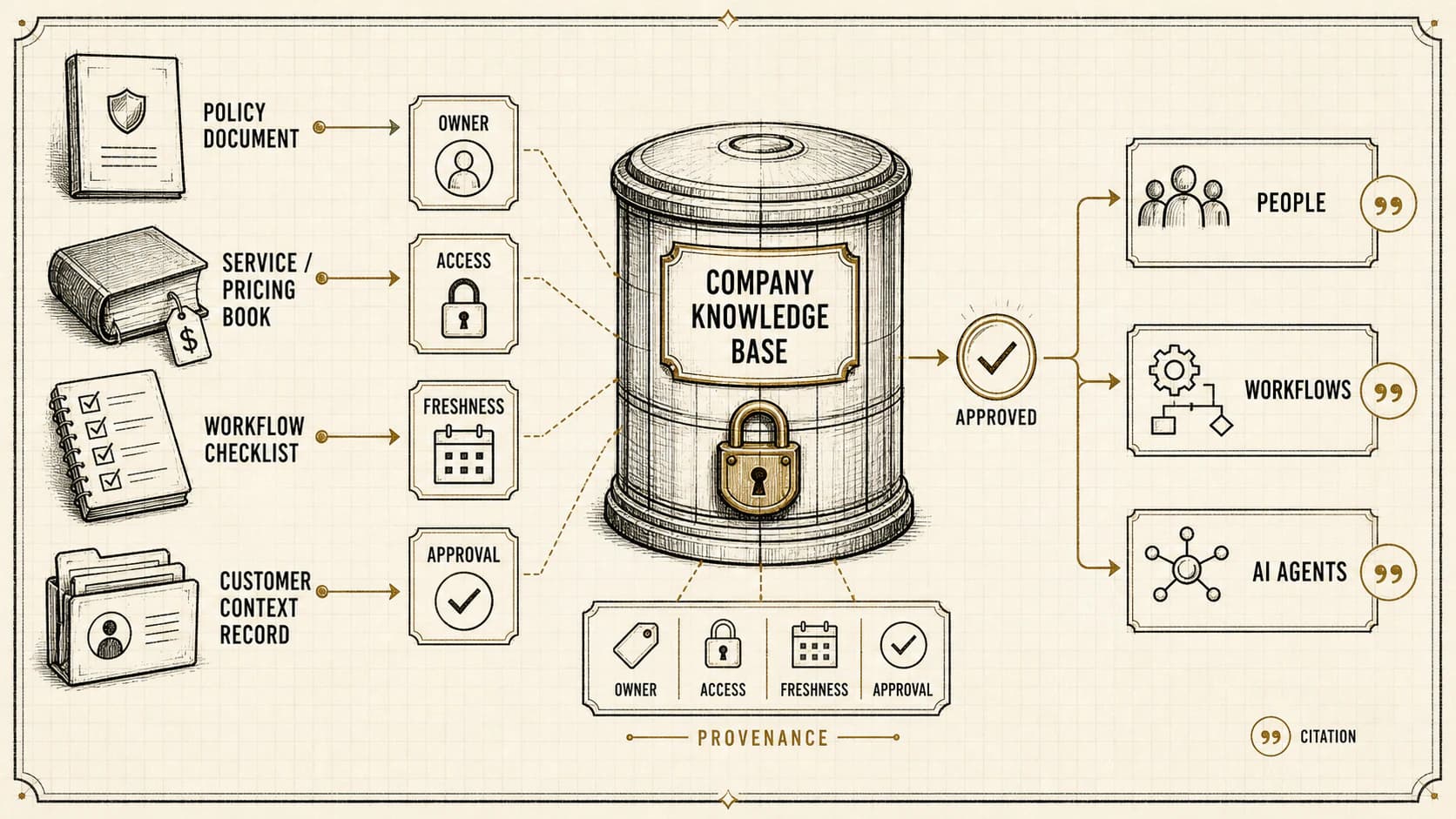
Assign each knowledge area an accountable owner. Define source hierarchy, status, effective date, review date, and superseded content. Separate drafts, archived history, external reference material, and current approved guidance.
Do not treat frequency as authority. A statement repeated across old notes does not outrank a current approved policy. Preserve provenance so reviewers can inspect why an answer was produced.
3. Convert raw material into usable knowledge
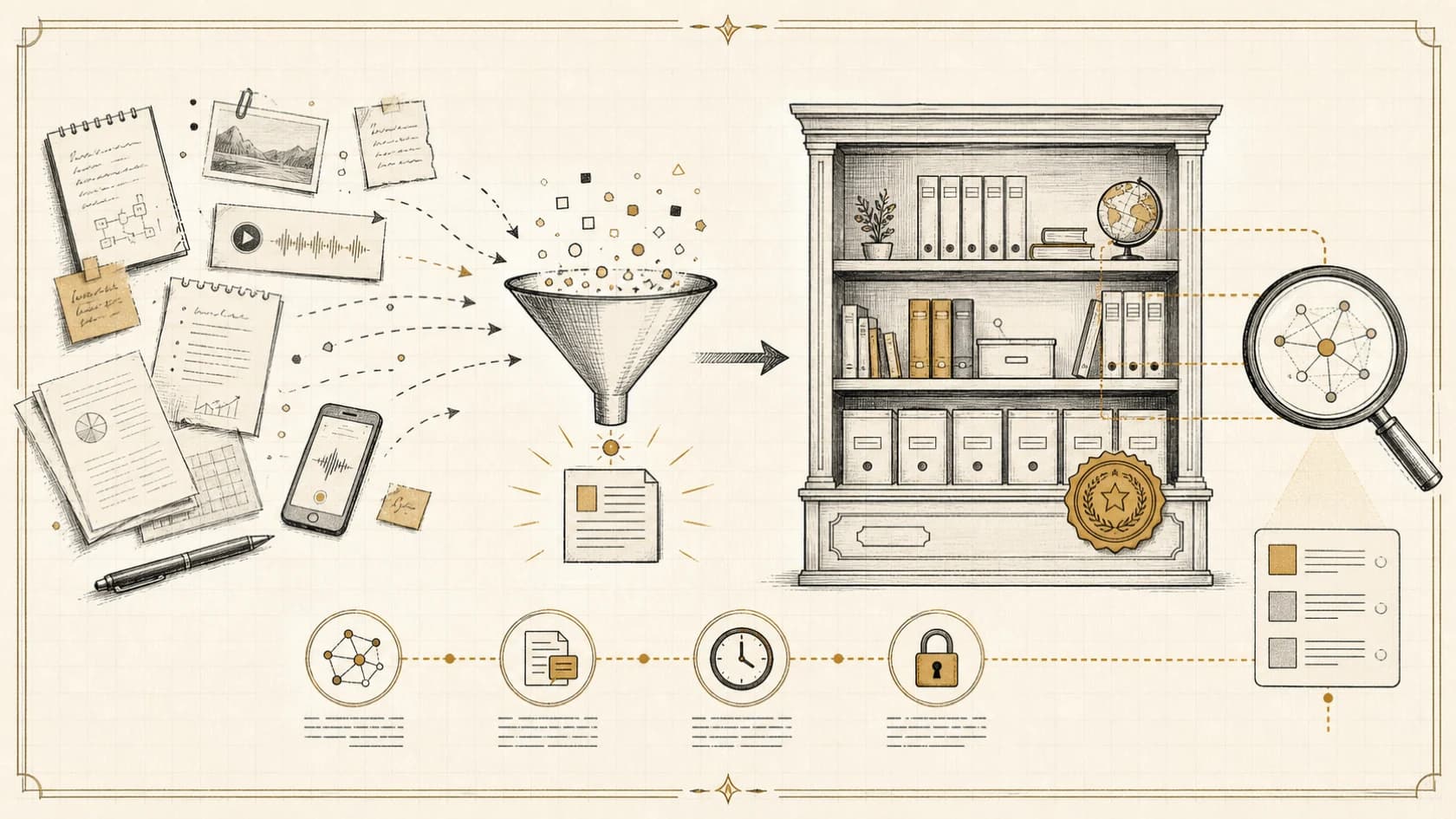
Raw meeting notes, transcripts, emails, and recordings contain valuable context, but they also contain speculation, personal details, outdated decisions, and incomplete language.
Use a controlled pipeline:
- ingest the raw source without destroying provenance;
- extract candidate facts, decisions, procedures, and open questions;
- resolve conflicts and missing context with the owner;
- publish a clear approved page or structured record;
- link the approved knowledge back to supporting sources;
- test retrieval against real questions;
- schedule review and deprecation.
Corey’s episode about building an AI second brain illustrates the broader raw-source, structured-wiki, and query pattern. The business requirement is governance: approved knowledge must be distinguishable from collected material.
4. Write for people and retrieval
Use clear titles, one subject per page, direct answers, definitions, decision tables, examples, exceptions, and links to related knowledge. Avoid pages whose meaning depends on remembering the meeting where they were written.
Add metadata useful to both operators and systems: owner, status, audience, authority, effective date, review date, source links, sensitivity, and relevant workflow.
Chunking and embeddings can help retrieval, but they do not repair vague or contradictory content. The company knowledge base for AI guide explains how source quality, retrieval, and citations work together.
5. Design access and privacy boundaries
Not every employee or agent should retrieve every source. Separate public, internal, confidential, and restricted knowledge according to business needs. Apply access at the source and retrieval layers.
Inventory personal, customer, financial, legal, security, and credential information. Remove secrets from knowledge documents. Define retention and deletion. Obtain appropriate legal or security advice when required.
An AI response should not reveal restricted information because the user asked persuasively or because a broadly scoped connector found it.
6. Test the questions people actually ask
Build a question set from search logs, staff questions, customer inquiries, training needs, and workflow exceptions. Include paraphrases, incomplete questions, terminology differences, ambiguous requests, conflicting sources, and unsupported questions.
Evaluate whether the system finds the correct source, cites it, answers within the permitted scope, acknowledges uncertainty, and follows the defined handoff. A fluent unsupported answer should fail.
Store failed questions as regression cases. They may reveal missing knowledge, poor structure, retrieval problems, unclear policy, or an access boundary—not just a prompt issue.
7. Make maintenance part of normal work
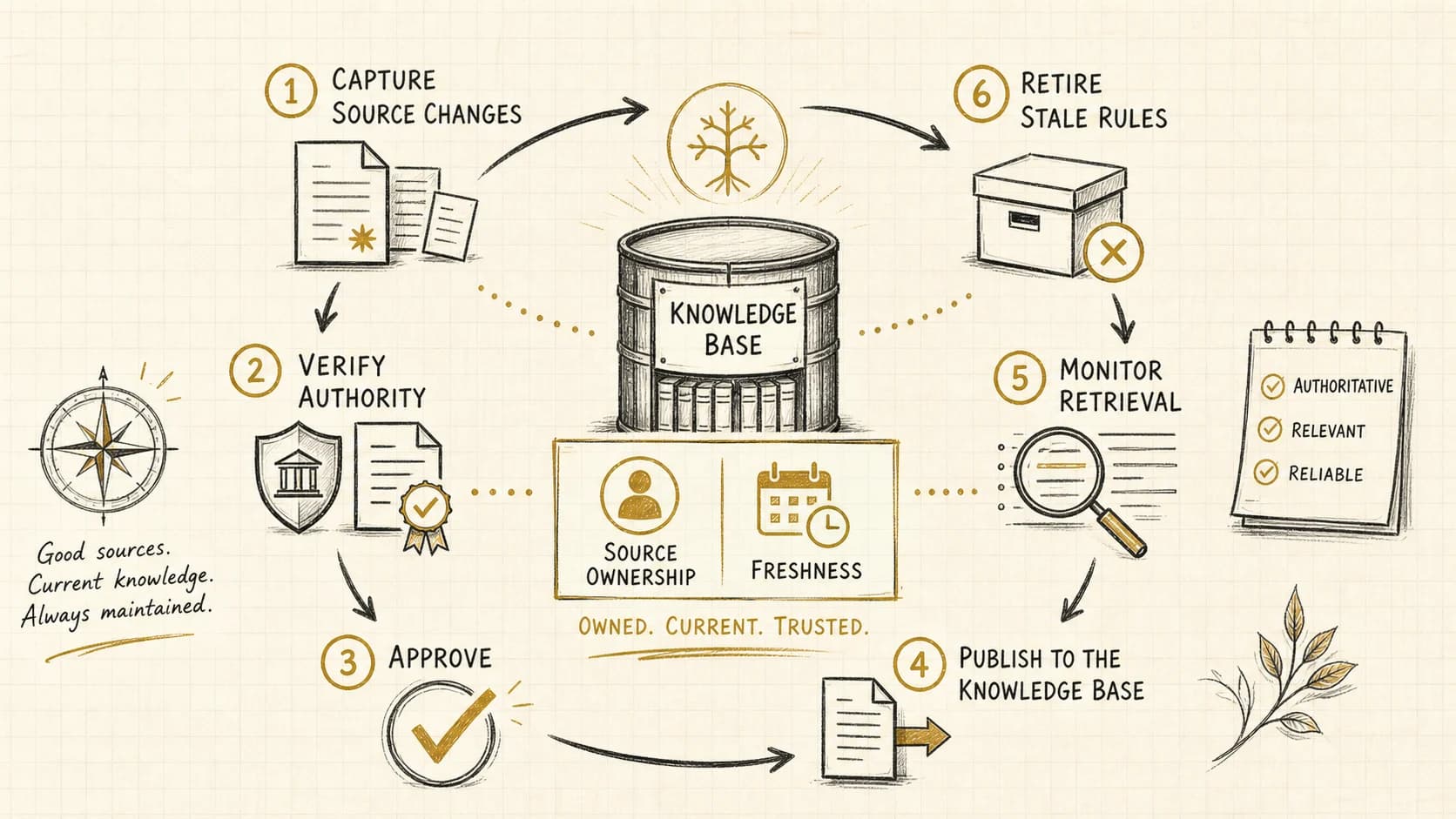
Knowledge changes when services, prices, tools, staff, laws, policies, and customer expectations change. Connect updates to the business events that create them.
Define who proposes, reviews, publishes, communicates, and verifies each change. Track stale pages, missing owners, overdue reviews, broken source links, unresolved conflicts, and repeated unsupported questions.
The knowledge-base maintenance guide provides a complete operating loop. Without it, the system degrades quietly.
8. Measure usefulness, not document volume
Useful measures include time to find an approved answer, questions resolved with citations, unsupported-question rate, owner corrections, stale pages, repeated questions, handoff completeness, and workflow errors linked to missing or outdated knowledge.
Compare with the previous baseline for the chosen function. More pages and more indexed tokens are not business outcomes. Knowledge earns its value when it improves a decision, handoff, or operating process.
Review qualitative signals beside counts. Ask operators whether they trust the answer, can inspect its source, know how to correct it, and understand what happens when evidence is missing. A lower answer rate may be healthier if the system stops guessing and routes unsupported questions to the right owner. The measure should reward accurate, usable knowledge—not confident coverage.
9. Knowledge management checklist
Small-business knowledge management should begin with the expensive question or recurring decision that the team currently reconstructs. If scattered knowledge is slowing response, producing inconsistent work, or blocking a useful AI system, apply for an assessment. When relevant, your report will identify the knowledge connections that improve the recommended next move.