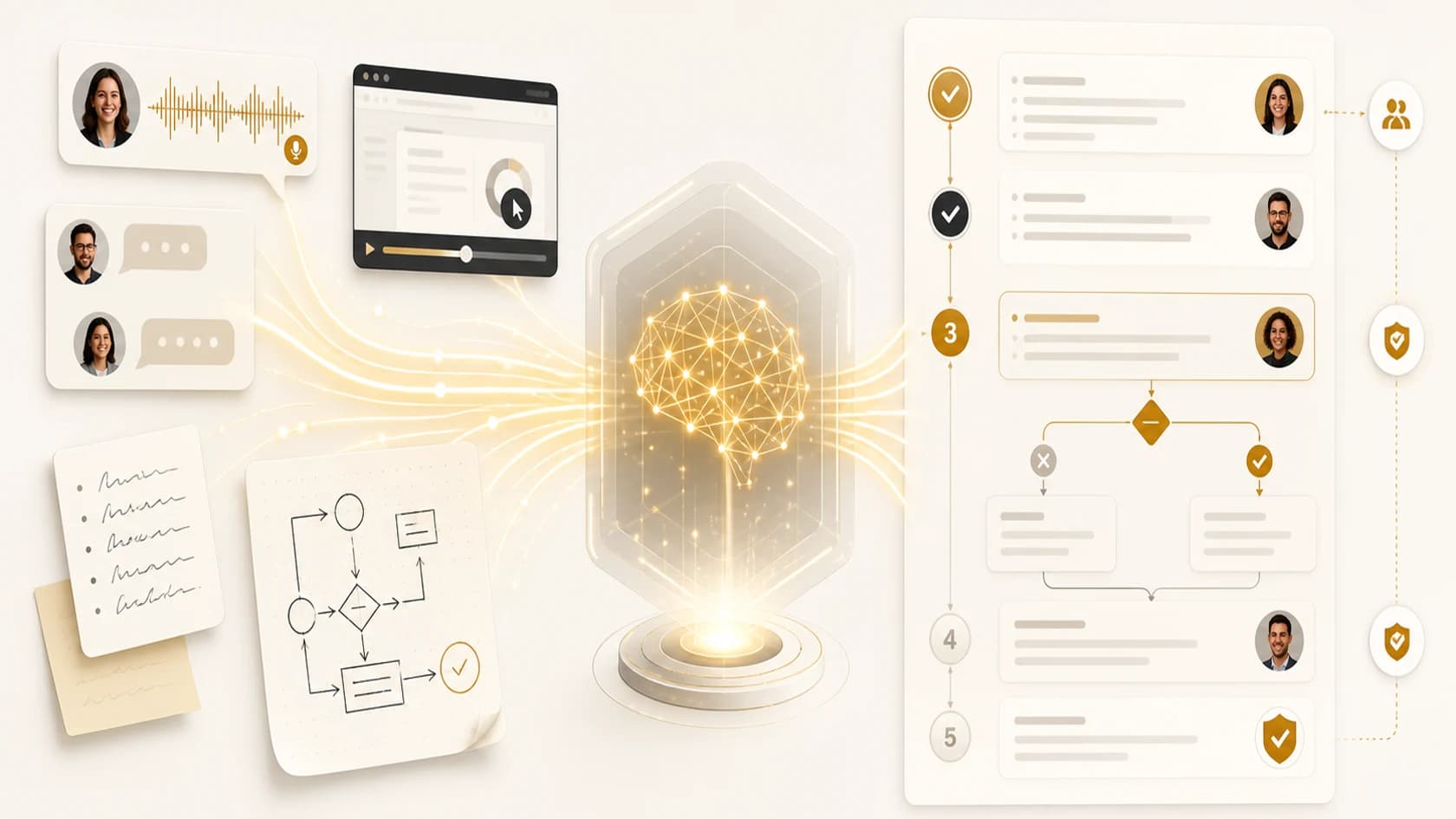
An AI SOP generator can turn a recording, notes, screenshots, or an interview into a clean first draft. That is useful. It is not the same as turning experience into a procedure another person can safely follow.
The hard part of standard operating procedure work is not sentence production. It is recovering hidden decisions: what triggers the process, which source is authoritative, what can vary, what must never happen, how exceptions escalate, and what evidence proves completion.
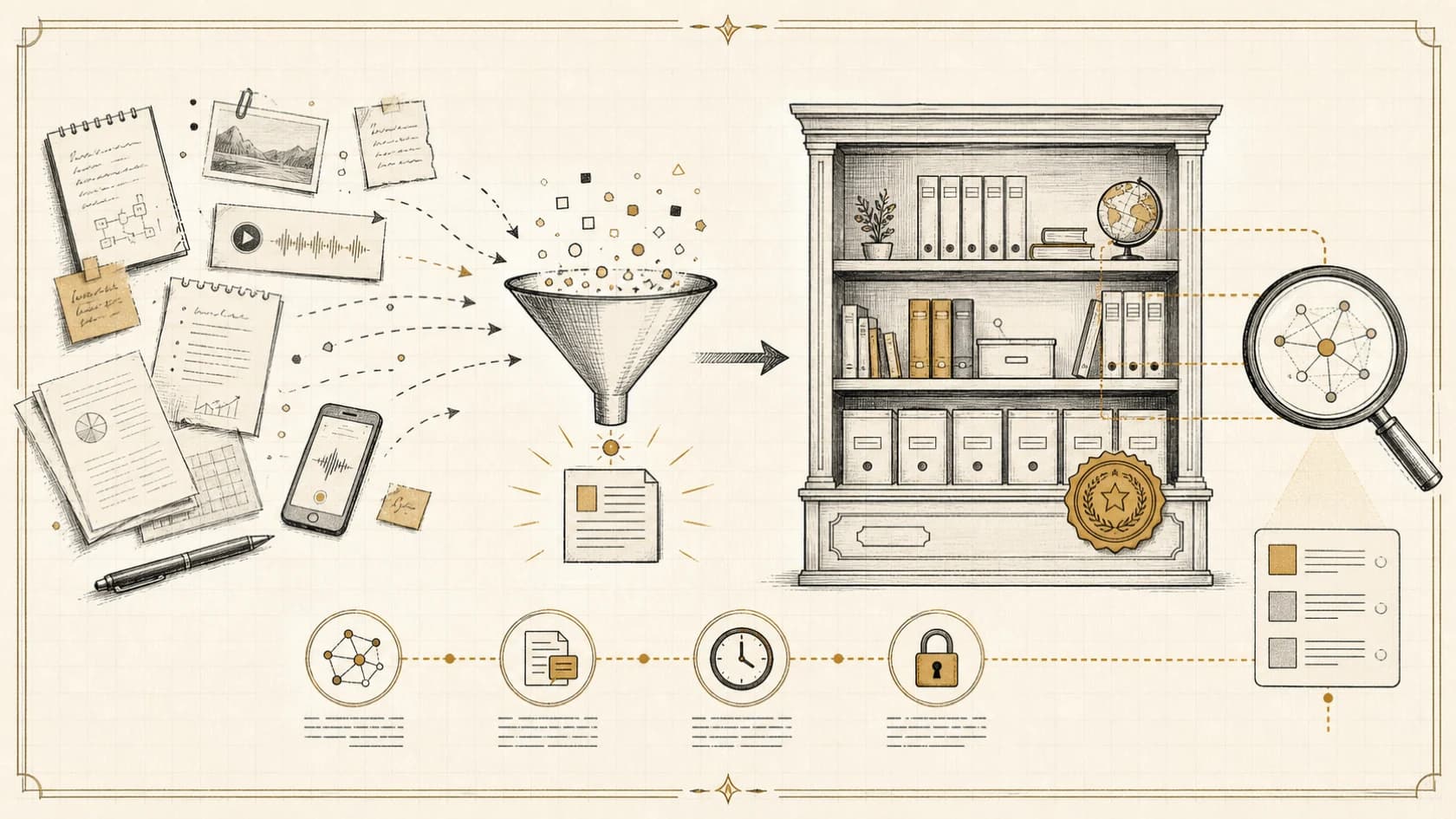
Corey Ganim's three-layer second-brain model offers the right mental model. Raw sources belong in one layer, durable reviewed knowledge in another, and generated outputs in a third. An AI SOP generator should move material through those layers. It should never blur a raw recollection and an approved instruction into the same thing.
1. Define the procedure before generating it
Name one process, one audience, and one finished state. "Client onboarding" is too broad. "Verify a signed consulting client is ready for kickoff and hand the complete record to the delivery lead" is testable.
Write the boundary:
- what event starts the procedure;
- which roles may perform it;
- which systems and source documents it uses;
- which decisions are allowed;
- which situations require escalation;
- what artifact or state proves completion.
This brief gives the generator a job. Without it, the model tends to produce a plausible generic checklist that may omit the very judgment your experienced employee uses.
2. Capture evidence, not just a polished explanation
Ask the experienced operator to perform a real representative case while narrating choices. Collect the approved form, template, policy, screen recording, example record, and final output. Then interview for variations and failure modes.
| Evidence source | What it reveals | Common limitation |
|---|---|---|
| Live task recording | Actual sequence, tools, and workarounds | One case may hide variations |
| Operator interview | Judgment, intent, and exceptions | Memory may simplify the real process |
| Current policy | Required boundaries and approvals | Policy may lag operating reality |
| Completed example | The expected artifact or business state | A good outcome may not show recovery steps |
| Error or escalation record | Where the process breaks | Records may lack the decision rationale |
Preserve provenance. Record who supplied each source, when it was valid, and what it is allowed to govern. If two sources disagree, create a review question. Do not ask the model to silently choose.
3. Draft the SOP in an operator-ready structure
A useful draft begins with purpose, owner, trigger, prerequisites, required access, definitions, and safety constraints. The steps then state an observable action and result.
Weak: "Review the client information."
Stronger: "Open the signed agreement from the approved contract record, compare the legal name, service package, effective date, and signer with the CRM record, and place any mismatch in the onboarding exception queue."
Include decision tables where the operator must choose a path. Include examples when format matters. Include the exact location of approved templates without embedding secrets or fragile personal paths.
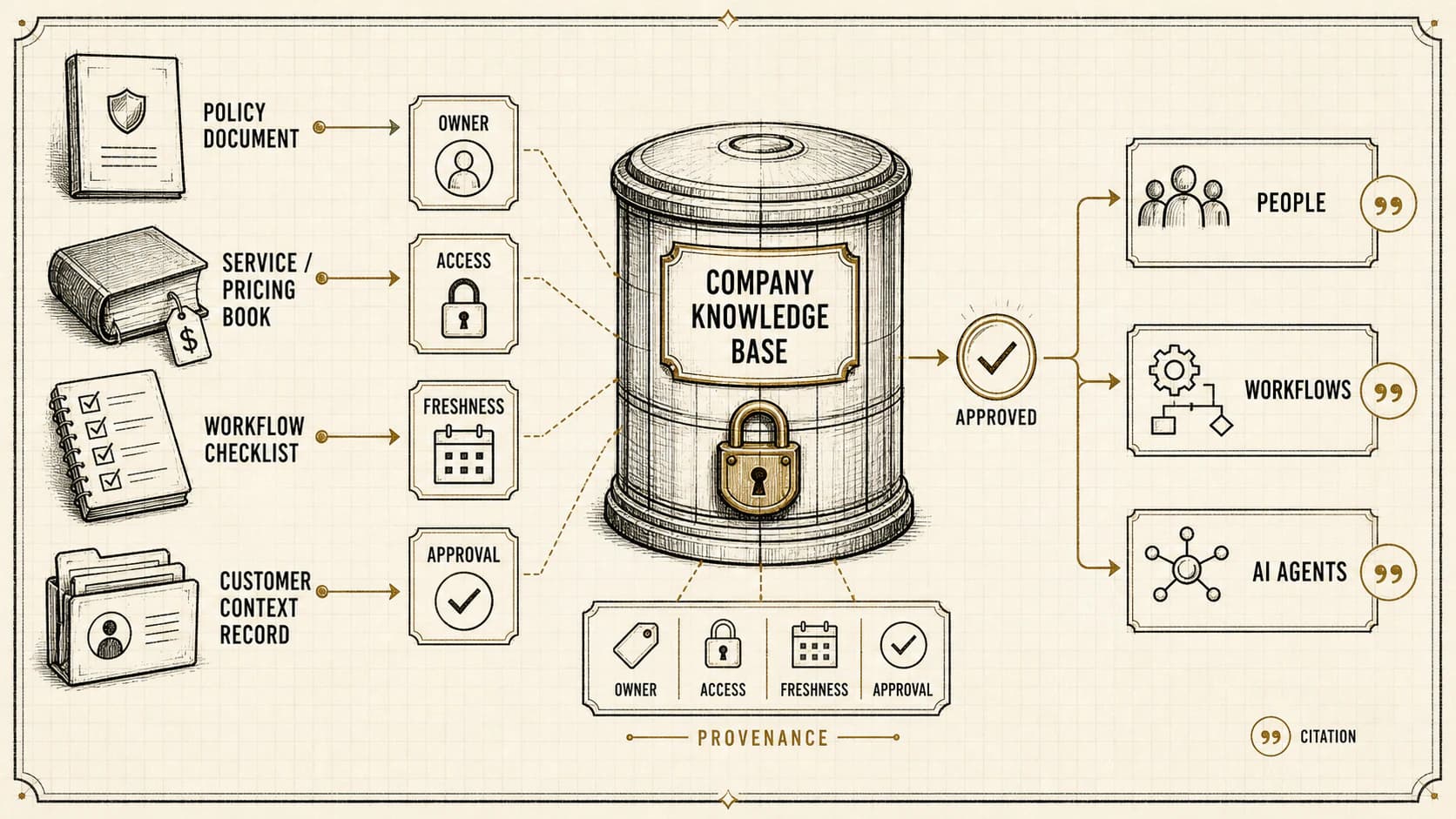
The company knowledge base guide explains why procedures need ownership, metadata, hierarchy, retrieval, and a publishing workflow to remain useful to both people and agents.
4. Make uncertainty visible
An AI SOP generator will often make incomplete information sound settled. Require it to mark unsupported steps, conflicting sources, missing definitions, unclear ownership, and inferred sequence.
Use explicit labels such as "needs owner decision," "source conflict," "example only," and "not verified in the observed case." These labels are not imperfections to edit away. They are the review queue.
For high-consequence processes, prevent the generator from adding legal, financial, security, safety, or client-commitment language that does not appear in an approved source. A fluent instruction without authority is more dangerous than an obvious blank.
5. Test with a second operator
The author is usually a poor acceptance tester because they unconsciously fill gaps. Give the draft, approved access, and a representative case to someone who did not write it.
Observe where they pause, interpret, search elsewhere, ask for help, or produce a different state. Those are defects in the procedure or its prerequisites. Update the source decision before polishing the prose.
Acceptance evidence might include a correctly completed record, expected file structure, approved customer message, reconciled totals, passed quality check, or successful handoff. "They read it and agreed" does not prove executability.
6. Approve and publish deliberately
Separate draft, review, approved, and retired states. Name the process owner and any specialist approver. Record the effective date, version, source set, review date, and change summary.
Publish one authoritative copy. Links, agents, and training should resolve to that copy rather than duplicate text across shared drives and personal documents. Restrict editing, but make feedback and exception reporting easy.
The knowledge management guide for small business provides a practical source-of-truth model when documentation is currently scattered across several tools.
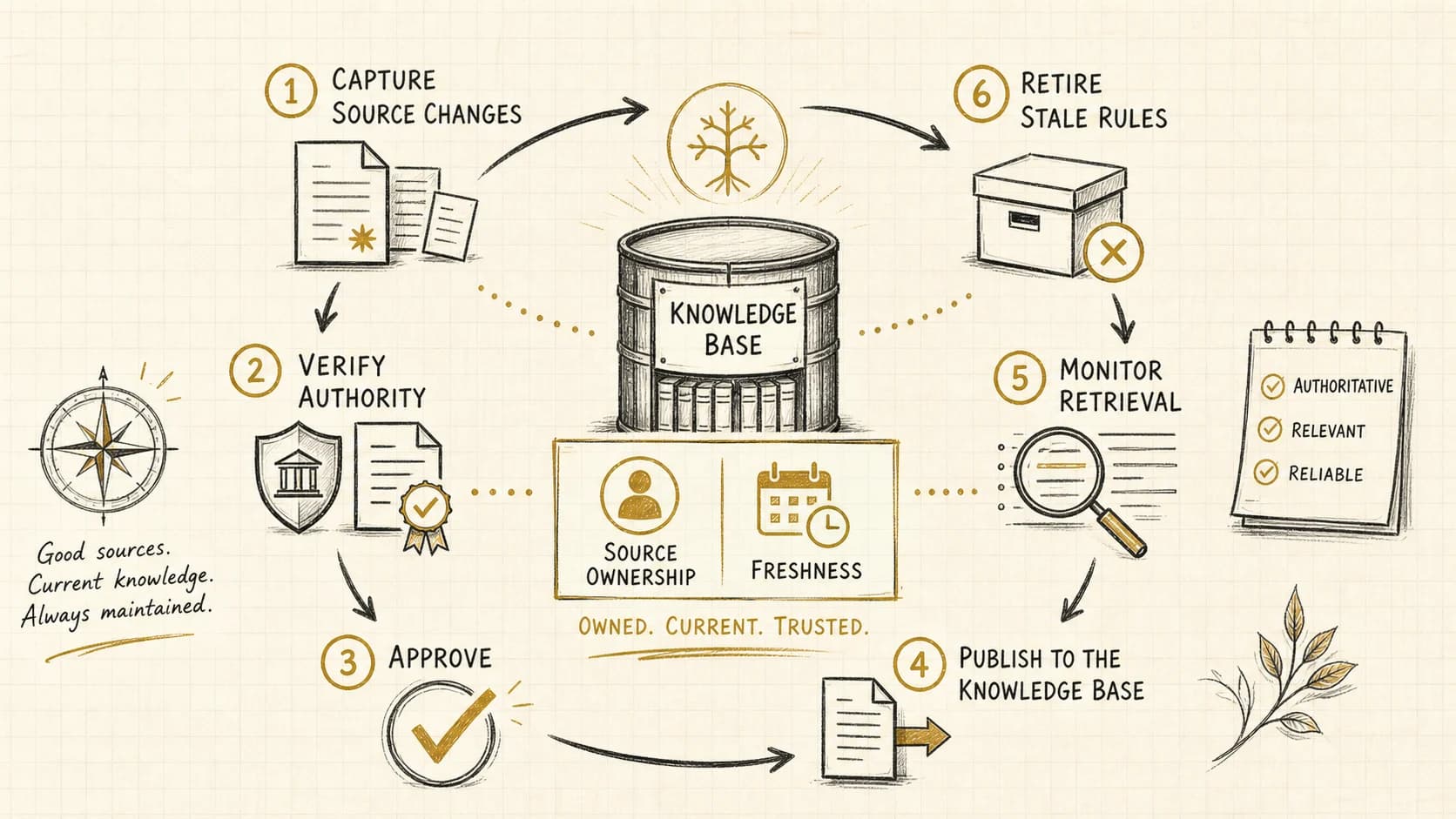
7. Design the maintenance loop
Procedures change when tools, roles, policies, offers, integrations, and client expectations change. Connect those events to review. Also capture real exceptions: if operators repeatedly work around a step, the SOP may be wrong even when the document has not expired.
Review usage and outcome evidence. A procedure nobody can find, a procedure everyone ignores, and a procedure everyone follows into the wrong result are different problems.
When AI uses the SOP, log the version and source citations behind important outputs. The AI knowledge-base maintenance guide shows how freshness, conflict resolution, regression tests, and retirement become an operating discipline.
8. Choose a generator by workflow fit
The best tool depends on the sources and maintenance model. Some products excel at turning screen recordings into step cards. Others are better at interviewing an operator, structuring text, managing approvals, or publishing searchable knowledge.
Before buying, test the same real process in your shortlist. Check source traceability, image and step editing, decision tables, roles and permissions, version history, review dates, export, search, integrations, and access revocation. Evaluate the finished operating procedure, not the first generated draft.
Avoid a tool that makes it easy to create hundreds of documents but difficult to know which one is approved.
9. AI SOP generator checklist
The opportunity is not faster documentation. It is converting fragile team memory into an operational asset that people and agents can use without guessing.
If critical procedures still live in recordings, inboxes, and one employee's head, apply for an assessment to determine which repeated bottleneck, knowledge connection, or custom skill deserves attention first.